The British men in the business of colonizing the North American continent were so sure they “owned whatever land they land on” (yes, that’s from Pocahontas), they established new colonies by simply drawing lines on a map.
Then, everyone living in the now-claimed territory, became a part of an English colony.
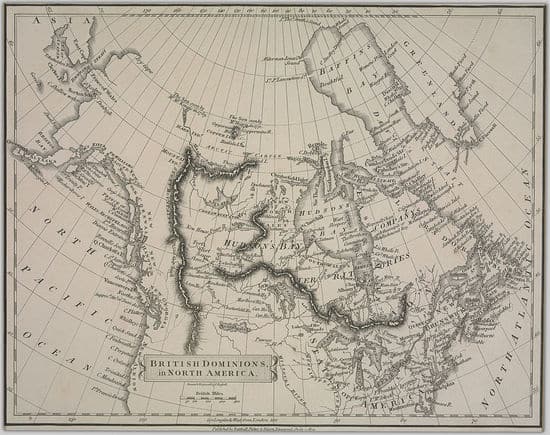
And of all the lines drawn on maps in the 18th century, perhaps the most famous is the Mason-Dixon Line.
Table of Contents
What is the Mason-Dixon Line?
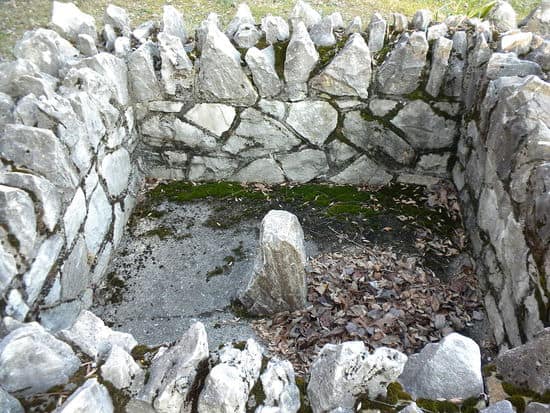
The Mason-Dixon Line also called the Mason and Dixon Line is a boundary line that makes up the border between Pennsylvania, Delaware, and Maryland. Over time, the line was extended to the Ohio River to make up the entire southern border of Pennsylvania.
But it also took on additional significance when it became the unofficial border between the North and the South, and perhaps more importantly, between states where slavery was allowed and states where slavery had been abolished.
READ MORE: The History of Slavery: America’s Black Mark
Where is the Mason-Dixon Line?
For the cartographers in the room, the Mason and Dixon Line is an east-west line located at 39º43’20” N starting south of Philadelphia and east of the Delaware River. Mason and Dixon resurveyed the Delaware tangent line and the Newcastle arc and in 1765 began running the east-west line from the tangent point, at approximately 39°43′ N.
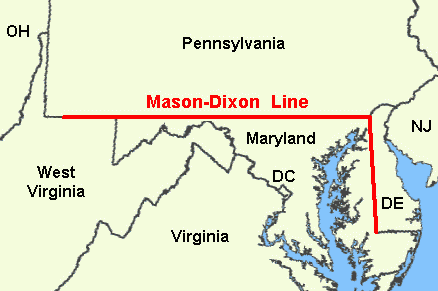
For the rest of us, it’s the border between Maryland, West Virginia, Pennsylvania and Virginia. The Pennsylvania–Maryland border was defined as the line of latitude 15 miles (24 km) south of the southernmost house in Philadelphia.
Mason-Dixon Line Map
Take a look at the map below to see exactly where the Mason Dixon Line is:
Why Is it Called the Mason-Dixon Line?
It is called the Mason and Dixon Line because the two men who originally surveyed the line and got the governments of Delaware, Pennsylvania and Maryland to agree, were named Charles Mason and Jeremiah Dixon.
Jeremiah was a Quaker and from a mining family. He showed a talent early on for maths and then surveying. He went down to London to be taken on by the Royal Society, just at a time when his social life was getting a bit out of hand.
He was a bit of a lad by all accounts, not your typical Quaker, and never married. He enjoyed socialising and carousing and was actually expelled from the Quakers for his drinking and keeping loose company.
Mason’s early life was more sedate by comparison. At the age of 28 he was taken on by the Royal Observatory in Greenwich as an assistant. Noted as a “meticulous observer of nature and geography” he later became a fellow of the Royal Society.
Mason and Dixon arrived in Philadelphia on 15 November 1763. Although the war in America had concluded some two years earlier, there remained considerable tension between the settlers and their native neighbours.
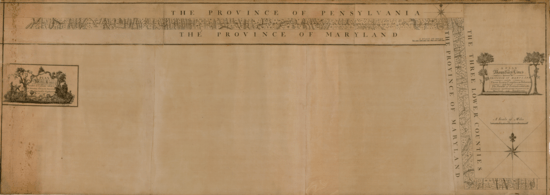
The line was not called the Mason-Dixon Line when it was first drawn. Instead, it got this name during the Missouri Compromise, which was agreed to in 1820.
It was used to reference the boundary between states where slavery was legal and states where it was not. After this, both the name and its understood meaning became more widespread, and it eventually became part of the border between the seceded Confederate States of America and Union Territories.
Why Do We Have a Mason-Dixon Line?
In the early days of British colonialism in North America, land was granted to individuals or corporations via charters, which were given by the king himself.
However, even kings can make mistakes, and when Charles II granted William Penn a charter for land in America, he gave him territory that he had already granted to both Maryland and Delaware! What an idiot!?
William Penn was a writer, early member of the Religious Society of Friends (Quakers), and founder of the English North American colony the Province of Pennsylvania. He was an early advocate of democracy and religious freedom, notable for his good relations and successful treaties with the Lenape Native Americans.
Under his direction, the city of Philadelphia was planned and developed. Philadelphia was planned out to be grid-like with its streets and be very easy to navigate, unlike London where Penn was from. The streets are named with numbers and tree names. He chose to use the names of trees for the cross streets because Pennsylvania means “Penn’s Woods”.
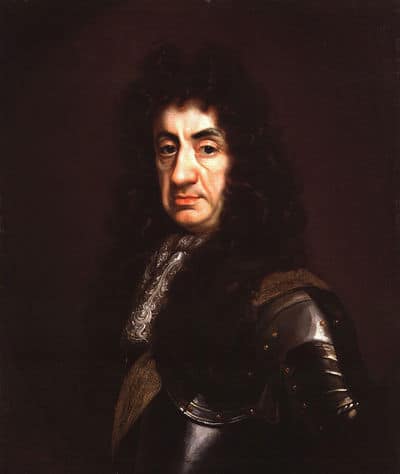
But in his defense, the map he was using was inaccurate, and this threw everything out of whack. At first, it wasn’t a huge issue since the population in the area was so sparse there were not many disputes related to the border.
But as all the colonies grew in population and sought to expand westward, the matter of the unresolved border became a much more prominent in mid-Atlantic politics.
The Feud
In colonial times, as in modern times, too, borders and boundaries were critical. Provincial governors needed them to ensure they were collecting their due taxes, and citizens needed to know which land they had a right to claim and which belonged to someone else (of course, they didn’t seem to mind too much when that ‘someone else’ was a tribe of Native Americans).
The dispute had its origins almost a century earlier in the somewhat confusing proprietary grants by King Charles I to Lord Baltimore (Maryland) and by King Charles II to William Penn (Pennsylvania and Delaware). Lord Baltimore was an English nobleman who was the first Proprietor of the Province of Maryland, ninth Proprietary Governor of the Colony of Newfoundland and second of the colony of Province of Avalon to its southeast. His title was “First Lord Proprietary, Earl Palatine of the Provinces of Maryland and Avalon in America”.
A problem arose when Charles II granted a charter for Pennsylvania in 1681. The grant defined Pennsylvania’s southern border as identical to Maryland’s northern border, but described it differently, as Charles relied on an inaccurate map. The terms of the grant clearly indicate that Charles II and William Penn believed the 40th parallel would intersect the Twelve-Mile Circle around New Castle, Delaware, when in fact it falls north of the original boundaries of the City of Philadelphia, the site of which Penn had already selected for his colony’s capital city. Negotiations ensued after the problem was discovered in 1681.
As a result, solving this border dispute became a major issue, and it became an even bigger deal when violent conflict broke out in the mid-1730s over land claimed by both people from Pennsylvania and Maryland. This little event became known as Cresap’s War.
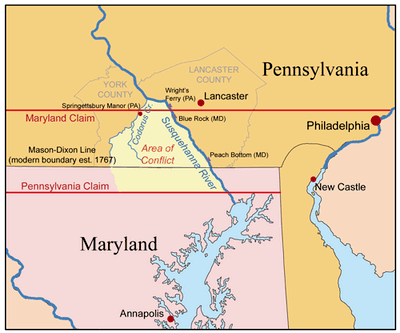
To stop this madness, the Penns, who controlled Pennsylvania, and the Calverts, who were in charge of Maryland, hired Charles Mason and Jeremiah Dixon to survey the territory and draw a boundary line to which everyone could agree.
But Charles Mason and Jeremiah Dixon only did this because the Maryland governor had agreed to a border with Delaware. He later argued the terms he signed to were not the ones he had agreed to in person, but the courts made him stick to what was on paper. Always read the fine print!
This agreement made it easier to settle the dispute between Pennsylvania and Maryland because they could use the now established boundary between Maryland and Delaware as a reference. All they had to do was extend a line west from the southern boundary of Philadelphia, and…
The Mason-Dixon Line was born.
Limestone markers measuring up to 5ft (1.5m) high – quarried and transported from England – were placed at every mile and marked with a P for Pennsylvania and M for Maryland on each side. So-called Crown stones were positioned every five miles and engraved with the Penn family’s coat of arms on one side and the Calvert family’s on the other.
Later, in 1779, Pennsylvania and Virginia agreed to extend the Mason-Dixon Line west by five degrees of longitude to create the border between the two colines-turned-states (By 1779, the American Revolution was underway and the colonies were no longer colonies).
In 1784, surveyors David Rittenhouse and Andrew Ellicott and their crew completed the survey of the Mason–Dixon line to the southwest corner of Pennsylvania, five degrees from the Delaware River.
Rittenhouse’s crew completed the survey of the Mason–Dixon line to the southwest corner of Pennsylvania, five degrees from the Delaware River. Other surveyors continued west to the Ohio River. The section of the line between the southwestern corner of Pennsylvania and the river is the county line between Marshall and Wetzel counties, West Virginia.
In 1863, during the American Civil War, West Virginia separated from Virginia and rejoined the Union, but the line remained as the border with Pennsylvania.
It’s updated several times throughout history, the most recent being during the Kennedy Administration, in 1963.
The Mason-Dixon Line’s Place in History
The Mason–Dixon line along the southern Pennsylvania border later became informally known as the boundary between the free (Northern) states and the slave (Southern) states.
It is unlikely that Mason and Dixon ever heard the phrase “Mason–Dixon line”. The official report on the survey, issued in 1768, did not even mention their names. While the term was used occasionally in the decades following the survey, it came into popular use when the Missouri Compromise of 1820 named “Mason and Dixon’s line” as part of the boundary between slave territory and free territory.
The Missouri Compromise of 1820 was United States federal legislation that stopped northern attempts to forever prohibit slavery’s expansion by admitting Missouri as a slave state in exchange for legislation which prohibited slavery north of the 36°30′ parallel except for Missouri. The 16th United States Congress passed the legislation on March 3, 1820, and President James Monroe signed it on March 6, 1820.
At first glance, the Mason and Dixon Line doesn’t seem like much more than a line on a map. Plus, it was created out of a conflict brought on by poor mapping in the first place…a problem more lines aren’t likely to solve.
But despite its lowly status as a line on a map, it eventually gained prominence in United States history and collective memory because of what it came to mean to some segments of the American population.
It first took on this meaning in 1780 when Pennsylvania abolished slavery. Over time, more northern states would do the same until all the states north of the line did not allow slavery. This made it the border between slave states and free states.
Perhaps the biggest reason this is significant has to do with the underground resistance to slavery that took place almost from the institution’s inception. Slaves who managed to escape from their plantations would try to make their way north, past the Mason-Dixon Line.
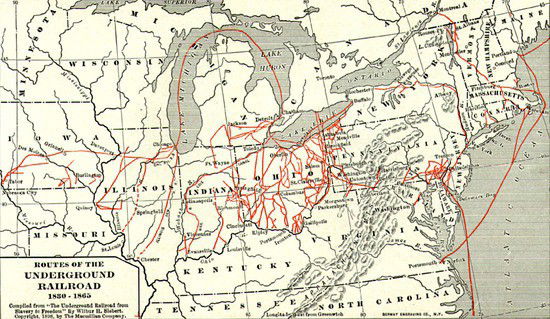
However, in the early years of United States history, when slavery was still legal in some Northern states and fugitive slave laws required anyone who found a slave to return him or her to their owner, meaning Canada was often the final destination. Yet it was no secret the journey got slightly easier after crossing the Line and making it into Pennsylvania.
Because of this, the Mason-Dixon Line became a symbol in the quest for freedom. Making it across significantly improved your chances of making it to freedom.
Today, the Mason-Dixon Line does not have the same significance (obviously, since slavery is no longer legal) although it still serves as a useful demarcation in terms of American politics.
The “South” is still considered to start below the line, and political views and cultures tend to change dramatically once past the line and into Virginia, West Virginia, Kentucky, North Carolina, and so on.
Beyond this, the line still serves as the border, and anytime two groups of people can agree on a border for a long time, everyone wins. There’s less fighting and more peace.
The Line and Social Attitudes
Because when studying the United States history the most racist stuff always comes from the South, it’s easy to fall into the trap of thinking the North was as progressive as the South was racist.
But this simply isn’t true. Instead, people in the North were just as racist, but they went about it in different ways. They were more subtle. Sneakier. And they were quick to judge Southern racist, pushing attention away from them.
In fact, segregation still existed in many northern cities, especially when it came to housing, and attitudes towards blacks were far from warm and welcoming. Boston, a city very much in the North, has had a long history of racism, yet Massachusetts was one of the first states to abolish slavery.
As a result, to say the Mason-Dixon Line separated the country by social attitude is a gross mischaracterization.
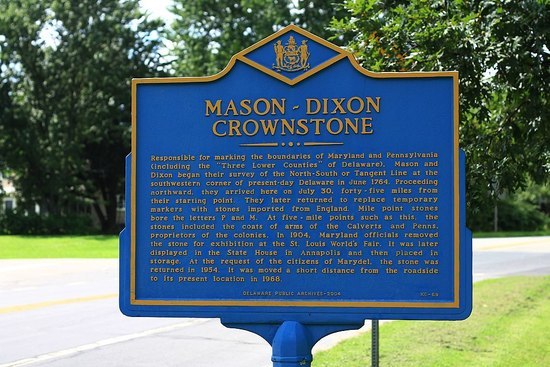
formulanone from Huntsville, United States [CC BY-SA 2.0
It’s true that blacks were generally safer in the North than in the South, where lynchings and other mob violence were quite common all the way up until the civil rights movement in the 1950s and 1960s.
But the Mason-Dixon Line is best understood as the unofficial border between the North and the South as well as the divider between free and slave states.
The Future of the Mason-Dixon Line
Although it still serves as the border of three states, the Mason-Dixon Line is most likely waning in significance. Its unofficial role as a border between the North and South only really remains because of the political differences between the states on each side.
However, the political dynamic in the country is changing rapidly, especially as demographics shift. What this will do to the difference between North and South, who knows?
Jbrown620 at English Wikipedia [CC BY-SA 3.0
If we use history as a guide, it’s safe to say the line will continue to serve some significance if in nothing else except our collective consciousness. But maps are redrawn constantly. What’s a timeless border today can be a forgotten boundary tomorrow. History is still being written.
READ MORE:
I’d say the line dividing the north and the south (culturally) is now south of Washington, DC. Fredericksburg, VA would be my opinion. Having lived, grown up, gone to school and now working in Northern, VA the attitudes here are much more in alignment with the north than the south.
It’s not particularly fair to say “Instead, people in the North were just as racist, but they went about it in different ways” when there is a significant difference between redlining a neighborhood or discriminations in a job (both bad behaviors) and the believe that one could literally own another human, split up his/her family, or kill them at will. Dragging the name of Christianity into this argument for violence was another wrong committed by the southern apologists. In the words of Texas’s secession statement: ” … that the servitude of the African race, as existing in these States, is mutually beneficial to both bond and free, and is abundantly authorized and justified by the experience of mankind, and the revealed will of the Almighty Creator.”
Great informative article