Let’s be honest: ancient Egypt will never cease to amaze and ignite the imagination. From the Valley of the Kings to the Great Sphinx of Giza, many aspects of this ancient world remain as alive today as they did thousands of years ago.
More than anything, Egyptian gods and goddesses remain a lively topic of discussion.
What is known in our modern-day age is that there are well over 2,000 gods that were worshiped in ancient Egypt. Some of these gods are familiar by name and function, while others may feel more obscure. For some of these gods and goddesses, we only know their names.
Admittedly, we don’t know all of the ins and outs of every god that was worshiped throughout Egyptian history (as cool as that would be). However, with new discoveries about this old civilization having new light shed on it every year, we can say with confidence that the momentus influence these many gods had on the ancient Egyptians impacted their course through history.
Below you will find a list of significant gods that were worshiped throughout ancient Egypt, including their realms of influence.
READ MORE: Ancient Egypt Timeline: Predynastic Period Until the Persian Conquest
Table of Contents
The Great Ennead in Ancient Egypt
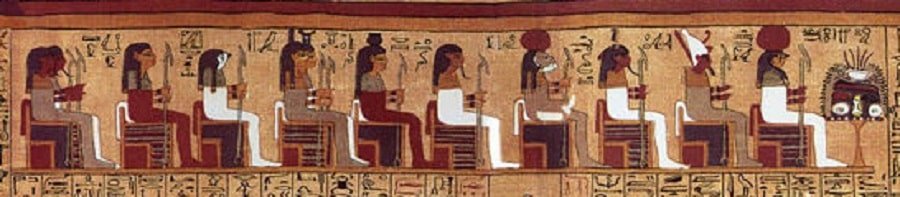
The (Great) Ennead is a collective of nine major gods and goddesses that were worshiped throughout Egyptian history. While there are various – disputing – compositions of the Ennead, the priests at Heliopolis held a strong belief that theirs were true and original.
In ancient Egypt, Heliopolis was a massive religious and cult center for the Ennead, and the former capital of the 13th nome, a sort of Egyptian province. The city saw expansion during the Old Kingdom, though fell in disrepair sometime during the 1st century BC. In the present day and age, what was once Heliopolis is now known as the suburb Ayn Shams, Cairo. Here, the Al-Masalla Obelisk from the Temple of Atum-Ra still looms.
Atum, the sun god and creator, and his eight descendants made up the Great Ennead at Heliopolis in Lower Egypt.
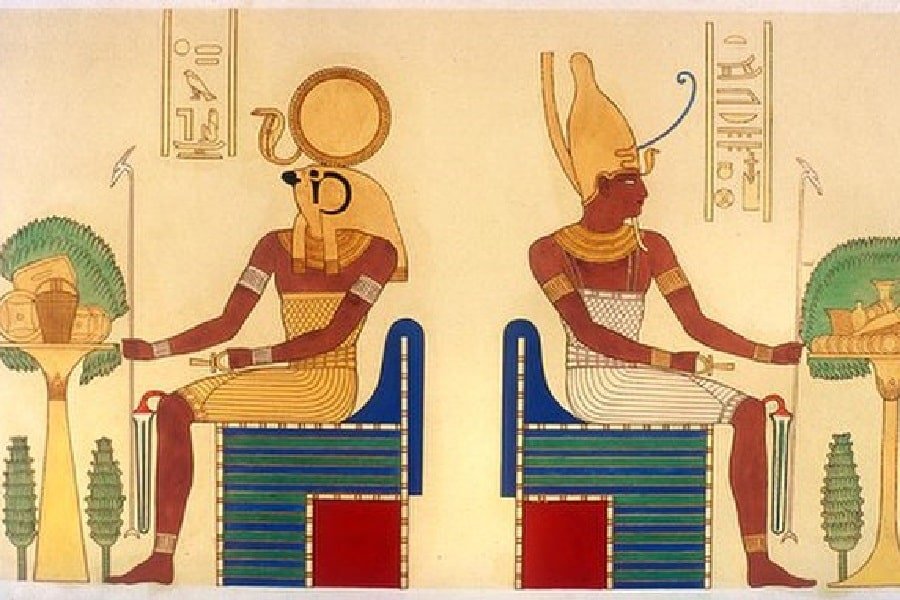
Atum – Primordial God, the Lord of the Universe
Realm(s): creation, sun
Major Temple: Heliopolis
In Heliopolitan Theology, Atum was the first of the Egyptian gods, and the one responsible for creating the gods of The Great Ennead and the world.
As the story goes, Atum sort of willed himself into existence from the primordial waters of chaos, known as Nun. Other popular thoughts on the origins of his existence emerge from opposing writings; some say he was made by Ptah, or that he emerged from a lotus flower at the beginning of time, or that he hatched from a celestial egg!
Regardless of how exactly he came to be, Atum is undeniably a crucial figure in Egyptian religion as the first god. It is said that he had exclaimed the first spoken word, Hu, upon creating his children Tefnut and Shu.
Being one of Egypt’s famous sun gods, Atum was frequently linked to Ra throughout history as Atum-Ra. The union of the two gods takes prominence in the Pyramid Texts (funerary texts dating back to the Old Kingdom), where both deities are called upon together and individually throughout various hymns.
Atum is portrayed as a man donning the pschent, a double crown that combined the respective crowns of Upper and Lower Egypt that became the standard following Egypt’s unification. The image of Atum wearing a pschent established him as a guardian god over all of Egypt. Occasionally he was shown as wearing a nemes headdress which connected him uniquely to Egyptian royalty.
Shu – The God of the Air and Supporter of the Sky
Realm(s): sunlight, air, wind
Major Temple: Heliopolis
It goes without saying that the children of Atum were the ultimate dynamic duo. They did everything together.
Literally.
According to Pyramid Texts 527, the twins were spat out by their father. Depending on the telling, they may have been sneezed out, one after the other. Miraculously, the pair managed to create a habitable place on Earth, with Shu’s shoulders supporting the weight of the sky (the Greeks related Shu to the titan, Atlas!).
Where Tefnut provided life-giving rain and moisture to encourage the growth of vegetation, Shu became the personification of the Earth’s atmosphere.
As the story is told, Shu is credited with being a sort of creator god: He separated his children, the god of the earth, Geb, and the sky goddess, Nut, and thus created the conditions appropriate for life to take hold on Earth.
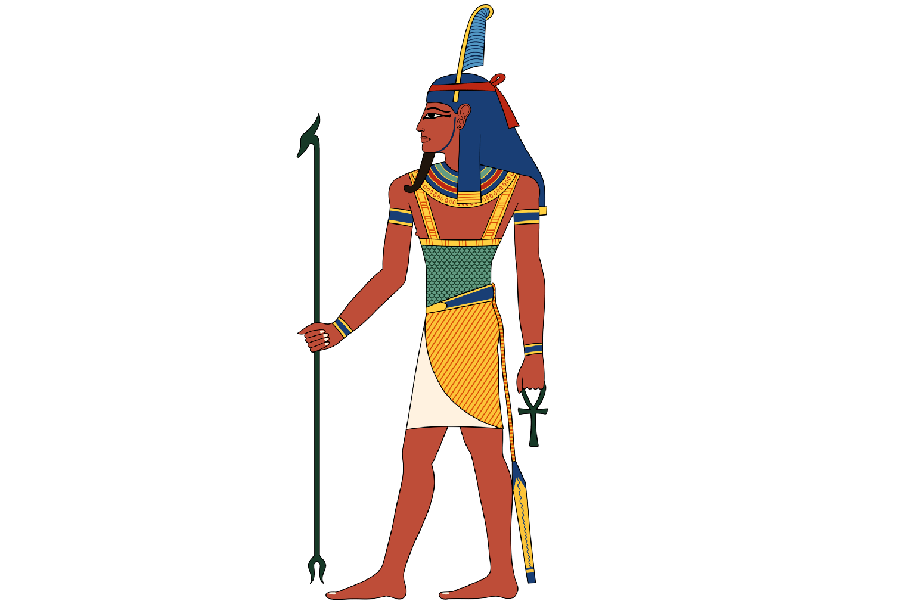
This powerful deity was most often portrayed as a man with an ostrich feather on top of his head. The ostrich feather likely was related to Ma’at, the Egyptian concept of cosmic balance and justice, and represented the qualities of truth and purity.
On another hand, some depictions have the twins shown as lions, or as human beings with the heads of lions. In Heliopolis, Shu and Tefnut are often portrayed in this way. By showing them to be lions, worshippers acknowledged the power of the twins, and related them back to their father, Atum, through their perceived might.
Tefnut – The of Moisture, Rain, Dew, and Water
Realm(s): moisture, rain, dew, fertility
Major Temple: Heliopolis
As the daughter of Atum, Tefnut had a lot going for her. After all, she was the first goddess and a compliment to her twin brother, Shu, in function. Furthermore, being the goddess of moisture and rain, she made it possible for vegetation to grow in desert regions. Shu may have given man a place to live, but Tefnut gave man the ability to continue living.
By some accounts, Tefnut is worshiped as a moon goddess, associated with lunar cycles.
In one myth surrounding Tefnut, she became angry at her father, Atum, and fled from Egypt to Nubia. A severe drought riddled Egypt as a result, and it only ended when Atum was able to convince his daughter to return. The tale casts Tefnut as an explosive goddess that was easy to anger, and when angry, she took her rage out on the people.
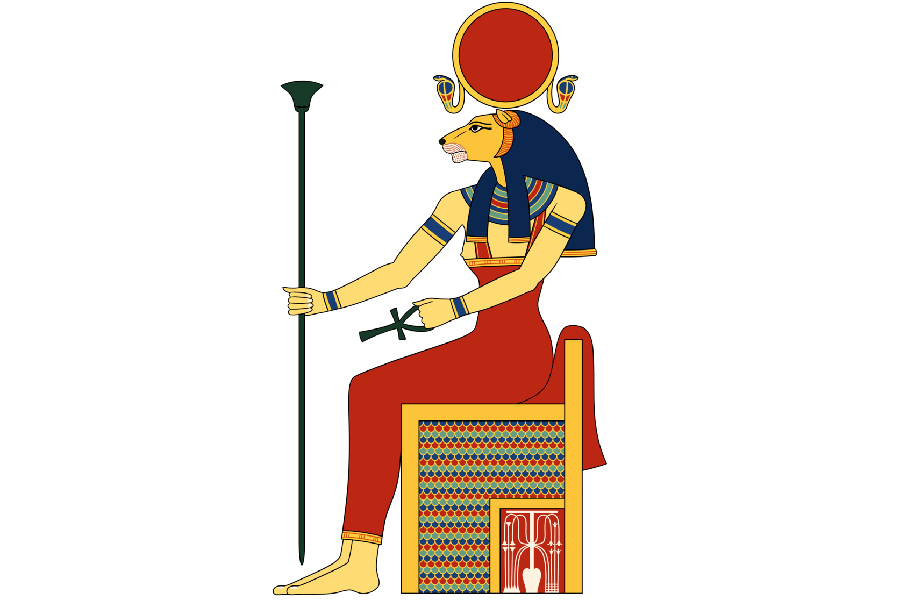
More often than not, Tefnut is shown as a woman with the head of a lioness; less often she is shown as a complete woman. In all depictions of this rain goddess, she wears a solar disk with a uraeus – an upright Egyptian cobra that is often an interpretation of divine authority. By additionally wielding a staff and the ankh, Tefnut is further established as a powerful and important goddess.
Geb – The God of the Earth
Realm(s): land, earth, stone
Major Temple: Heliopolis
In ancient Egypt, Geb was a vital deity when compared to other gods and goddesses within the pantheon. The Earth was his domain, and he had the power to do with it what he wished.
As with the rest of the Great Ennead, Geb’s cult center was established in Heliopolis. Here he was worshiped as the son of Tefnut and Shu, and as the father of Isis, Osiris, Nephthys, and Set. In the most significant myth involving this important god, his father Shu, separated him and his sister, Nut, when they were in an embrace, thus creating the earth and the sky.
Moreover, Geb’s significance can be felt in the understanding of death, and how ancient Egyptians processed it. As the god of the earth, it was believed that Geb would swallow the bodies of the deceased (burying them), with the act being known as “Geb opening his jaws.”
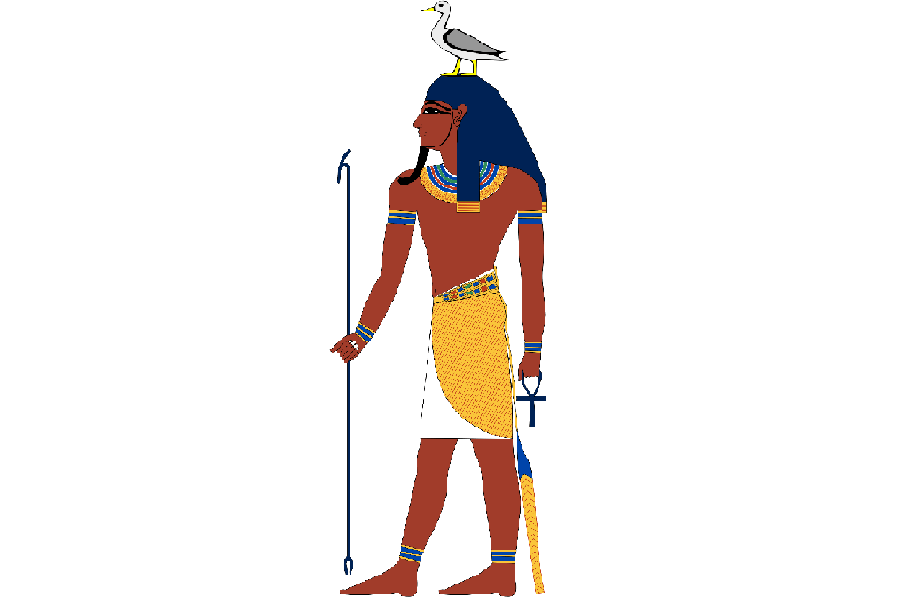
Appearance-wise, the earliest known image of Geb dates back to the Third Dynasty, and is anthropomorphic in nature. This style does not last long, as other reliefs and portrayals show the earth god to be a bull, ram, or (according to the Egyptian Book of the Dead) a crocodile. He can also be seen as a man reclined beneath Nut, his wife and the goddess of the sky, which highlights his unique position as an earth god; occasionally in this position he is shown to have the head of the snake, thanks to early religious interpretations believing him to be the “Father of Snakes” and so a snake god. More often than not, Geb is also green in color – or with green patches along his skin – hinting at his relationship with vegetation and plant life.
Contrarily, later depictions of Geb show him to be a standing man with a goose on his head, which leads (few) Egyptologists to speculate a relation between Geb and the celestial goose of creativity, Gengen Wer.
Gengen Wer
Gengen Wer is a celestial goose and protector god. Yes – that is correct. A giant, heavenly goose whose name translates to “Great Honker.”
He is believed to be a creative force in the universe, having protected (or created) the life force egg at the beginning of time from which the world emerged from.
Nut – The Goddess of the Sky, Stars, Cosmos, Mothers, and Astronomy
Realm(s): the night sky, stars, rebirth
Major Temple: Heliopolis
The mother of four of the most important Egyptian gods, Nut (pronounced as newt), had her hands full. Not only did she consistently eat the sun to give birth to a new dawn, but she also had to deal with her father constantly keeping her and her husband apart.
Granted, it was so there would be livable conditions on earth, but that’s beside the point.
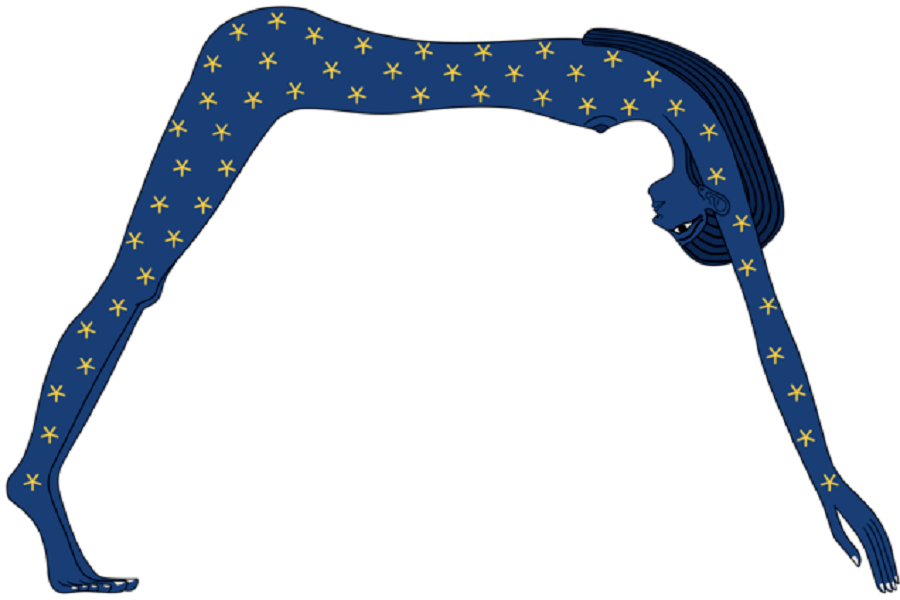
She is often depicted as an arched woman over the earth (Geb) being supported by her father, Shu, or as a giant celestial cow. Occasionally painted a deep blue, some religious texts described her as wearing rainbow robes.
In ancient Egypt, blue was a color reserved for use for the sky, the Heavens, and the primeval waters. In fact, the azure stone lapis lazuli was associated with the Egyptian gods throughout history.
Osiris – The God of the Afterlife, the Dead, the Underworld, Agriculture, and Fertility
Realm(s): afterlife, resurrection, the dead, agriculture, fertility
Major Temple: Abydos
This tragic character in the Osiris Myth is the better-known god of the dead in ancient Egypt. The son of Geb and Nut, Osiris was murdered and dismembered by his jealous brother, Seth. He is the father of the god, Horus, and one of the most revered gods in Egyptian religion.
Following the myth of Osiris, after his death, he was revived for a night by his wife, Isis, and their sister, Nephthys. During the short span of his resurrection, he was able to impregnate Isis with the infant Horus, who was destined to one day vanquish Set.
According to the Egyptian Book of the Dead, Osiris is confined to Duat, the Underworld, and that souls of the dead are taken before him. In early writings, he was primarily associated with deceased kings, though he was eventually associated with the dead as a whole.
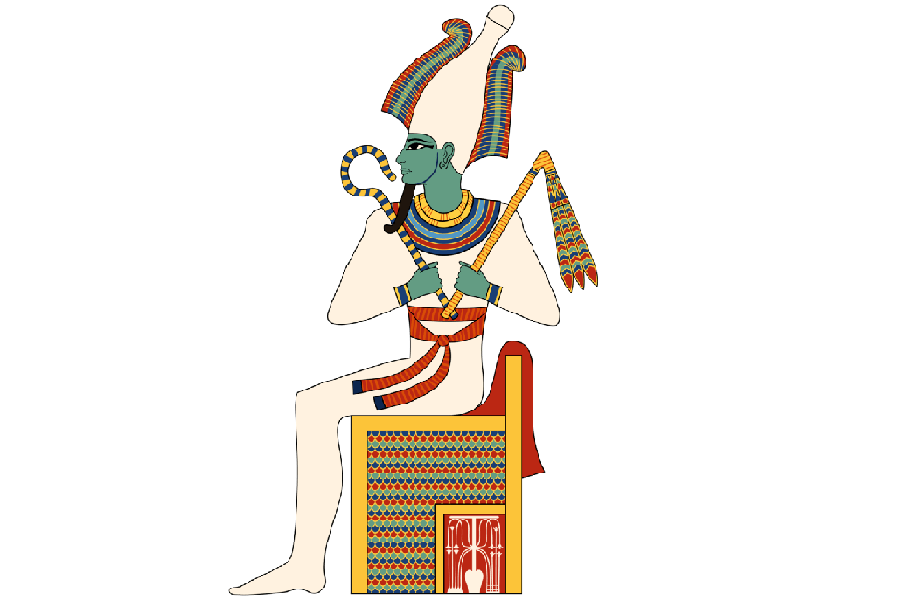
So much so was Osiris believed to guide the dead, he replaced Anubis by name in nearly all funerary texts during the time of the Old Kingdom. He is shown to be a human wearing a mummy’s shroud and the feathered Atef crown, representing his station in Upper Egypt and the image of his cult: the curled ostrich feather. His skin is almost always green, symbolizing his connection to the unique cycle of rebirth, or black.
Osiris is oftentimes seen wielding the crook and the flail, objects seen as representing the power and might of the pharaoh.
Isis – The Goddess of Healing and Magic
Realm(s): healing, protection, magic
Major Temple: Behbeit el-Hagar
Throughout Egyptian history, Isis is consistently cast as one of the nation’s major deities. She had been married to the major god, Osiris, during the events of the Osiris myth.
In the myth, her husband is brutally murdered at the hands of their destructive brother Seth. Isis was mournful, though more than anything, she wanted to avenge her dead lover.
With the help of Nephthys, Isis resurrected Osiris for a single night. While Osiris’ continued death was inevitable, his short time was enough to allow Isis to conceive. With the conceptian came an heir to the throne: Horus. As she feared what would become of her son if Set found out, Isis raised him in the marshes of the Nile until Horus became old enough to overthrow his uncle.
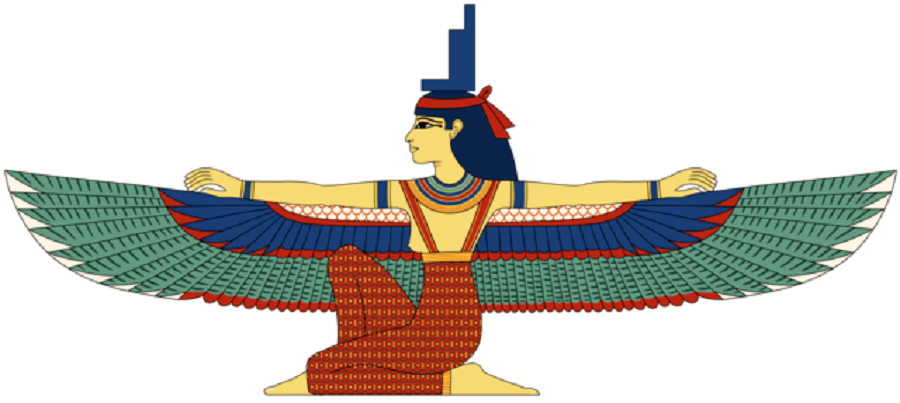
Through her actions in the Osiris Myth, the goddess Isis became known as a protective goddess, revered for her healing and magical qualities. Her depiction of a beautiful woman wearing a sheath dress and holding an ankh grants her associations with eternal life, as well as femininity.
Her cult spread throughout the far reaches of the Roman Empire after amassing a large following in Alexandria during the Hellenistic Period (323-30 BCE). At Alexandria, she became a patron deity of seafarers; a trait that was highlighted during the Roman festival, Navigium Isidis, when a model ship would be led by an elaborate procession to the sea. The goal of the Navigium Isidis was to pray for the safety of sailors and other seafarers through worship of Isis, further exemplifying her as a divine protector.
Set – The God of Deserts, Storms, Disorder, and Foreigners
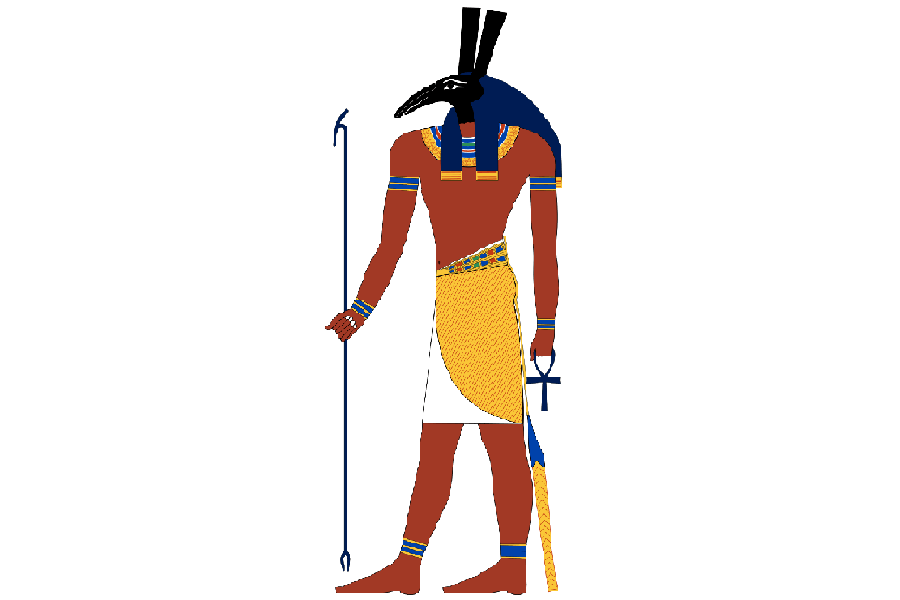
Name: Set (Seth)
Realm(s): war, foreigners, chaos, storms, deserts
Major Temple: Nubt
One of the more problematic of Egyptian deities, Set, is a war god, and the main antagonist in the Osiris Myth. Generally depicted as ill-tempered and impulsive, Set envied his elder brother’s rise to kingship and murdered him. It will not be until Set is challenged by his nephew, the falcon god Horus, does the dispute of rulership end.
After a violent skirmish that resulted in Horus losing an eye and Set being castrated, the two were brought before a tribunal of other gods and goddesses to sort out who was the rightful ruler of what. In the end, it was decided that Set would have rule over Upper Egypt and Horus would rule Lower Egypt.
However, this image of a violent, troublesome man is not the only variation of the jackal-headed god known to the ancient Egyptians. Instead, in an earlier period of ancient Egypt, Set was believed to care for the deceased and was honored for his kindness and diligence. Alternatively, he did not become known as an “evil” god until later on in Egypt’s vast history, after a series of conquests at the hands of foreign oppressors became associated with him.
Set is portrayed often as a fantastical mish-mash of a ton of different animals, which ancient Egyptians referred to as the “Seth animal.” The Seth animal would frequently have a human body, and a sloped, elongated head. As with other notable gods, he is shown holding the ankh in one hand, and a staff in another.
READ MORE: Ancient Egyptian Weapons: Spears, Bows, Axes, and More!
Nephthys – The Goddess of Death, Decay, Darkness, and Magic
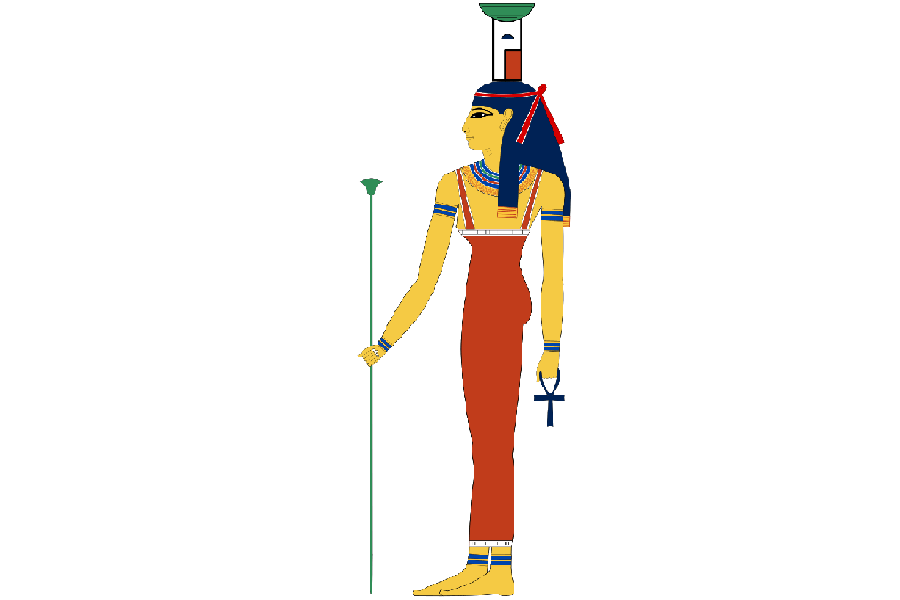
Realm(s): night, darkness, air, magic, death
Major Temple: Seperemu
Nephthys was another important goddess in ancient Egypt. She was the second daughter of Geb and Nut, and acted as a reflection of Isis in most representations. Whereas Isis was associated with healing and light, Nephthys became attributed to death and the dark.
Both goddesses were invoked during the reciting of funerary rites, although Nephthys would most often act as a primary funerary deity between the two. Her close associations with death likely is what established her as the mother of Anubis, the original god of the dead. Depending on the time, his father could have been Ra (if researching the Old Kingdom) or Osiris (if researching the Middle or New Kingdoms). However, most people generally believe that Set, the husband of Nephthys, was the father of Anubis, despite the couple’s strained relationship.
In the myth regarding the murder of Osiris, Nephthys helps Isis restore their dismembered older brother by helping her locate his body parts in the reeds of the Nile. With Nephthys’s help, Isis resurrected Osiris, which allowed Horus to be born.
During the New Kingdom in ancient Egypt, Nephthys saw her cult spread at the hands of Ramesses II with the construction of multiple new temples. That being said, Nephthys was not often singularly worshiped, instead more commonly being found in a triad with other gods and goddesses. She is depicted as a beautiful woman with a basket on her head, holding the ankh, and a priestess’ staff.
Chief Gods of the Old, Middle, and New Kingdoms
Chief gods were believed to be the most vital gods of the Egyptian pantheon. They were known to be powerful, influential, and oftentimes protective in nature. Although the identity of Egypt’s chief god changed often, ancient Egyptians would commonly unite the aspects of the current chief god with a previous one.
Ra – The Falcon-Headed Sun God
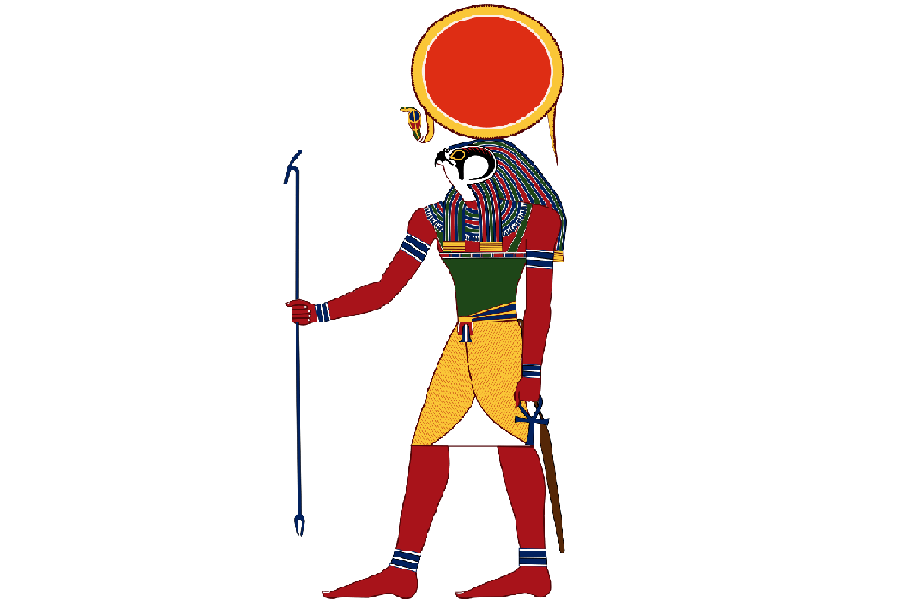
Realm(s): sun, sunlight, life, creation, kings
Major Temple: Karnak
When taking into regard the sheer significance of the sun and its power over all life on Earth, it is no surprise that a sun god like Ra can be thought to be King of the Gods.
Initially the chief god of the Old Kingdom (2686 BCE – 2181 BCE), Ra remained a respected sun god and creator god throughout the remainder of Egyptian history. With the head of a falcon, Ra dominated all physical things in the world, from the sky; to the earth; and to the Underworld. He merges with the two chief gods from the Middle and New Kingdoms, Horus and Amun, creating the identities of Ra-Horakhty and Amun-Ra.
Since Ra had a massive influence over all of Egypt, he was sometimes viewed as an aspect of the sun god Atum, which made him present at the creation of the world.
In fact, his human form is said to be Atum himself, while other aspects of Ra like Khepri, the embodiment of the rising sun and a scarab beetle, and Horus, the falcon, also make appearances throughout various writings.
The most important role Ra has, however, is his nightly fight against the god of chaos, Apep. He would travel on two solar barques named the Mandjet and Mesektet, accompanied by other gods, to stop darkness and chaos from consuming the world. Since the journey took him through Duat in the Underworld, certain gods well-equipped to defeat evil spirits and Underworld monsters joined him as well.
For most of this journey, it is said that Ra transforms into a ram – or a ram-headed god – and that he merges with Osiris upon reaching Duat.
The Eye of Ra
In Egyptian belief, the Eye of Ra was an accumulation of various goddesses that acted as an extension of the power of Ra himself. These goddesses were most often Sekhmet, Bastet, and Hathor, Ra’s daughters, although other goddesses also identified as being a part of the Eye, including the serpent goddess Wepset. Another less-known daughter of Ra was Anuket, the ancient Egyptian goddess of the Nile.
Ra-Horakhty – The God Horus, King of the Sky
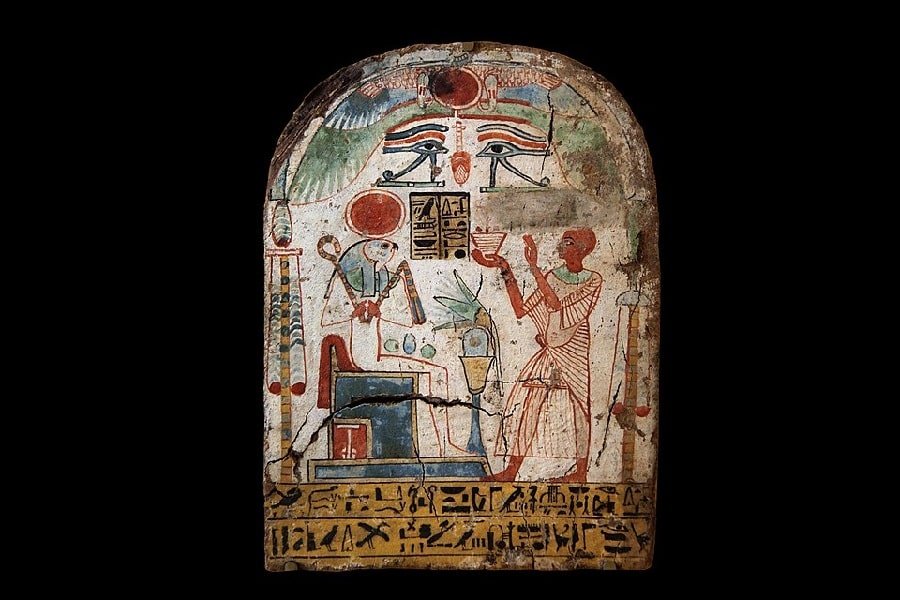
Realm(s): kingship, war, the sky, vengeance
Major Temple: Edfu
Being the chief god throughout much of the Middle Kingdom (2055 BCE – 1650 BCE), one could only imagine the significance Horus held. In early Egyptian history, he was once believed to be a member of the Great Ennead as one of Geb and Nut’s children. However, as time progressed he was instead identified as the son Horus: the child of Isis and Osiris. This pivotal change created two separate identities for the hawk god; one as Horus the Elder, and another as Horus the Younger.
Horus the Elder
As Horus the Elder, this sky god was believed to be the brother of Osiris, Isis, Set, and Nephthys, making him the son of Geb and Nut. In this case, Horus would be an original member of the Ennead of Heliopolis, and one of the oldest Egyptian gods.
Horus the Younger
Better known as the infant Horus, whose birth was recorded in the myth of Osiris, Horus the Younger is simply the son of the union of Isis and Osiris. He retains his identity as a sky god, and maintains his patronage over kings.
Four Sons of Horus
If at all familiar with the mummification process, you are likely familiar with canopic jars. Simply, canopic jars were used to individually store mummified organs during the embalming process such as the liver, stomach, lungs, and intestines. When personified as the Four Sons of Horus, the jars were known as Imsety, Duamutef, Hapi, and Qebehsenuef, respectively. The first mention of the Sons was found in the Pyramid Texts.
Amun (Amun-Ra) – The Pious God of Sun and Air
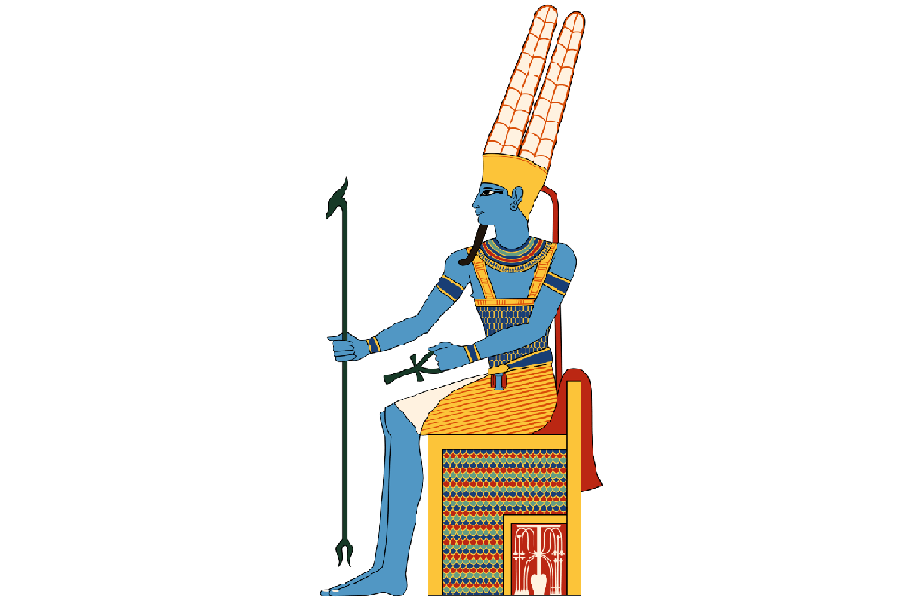
Realm(s): sun, creation, piety, protection
Major Temple: Jebel Barkal
First the city god of Thebes, Amun ascended to the status of a chief god following the rule of Ahmose I during the 18th Dynasty in the New Kingdom (1550 BCE – 1070 BCE). He was well-liked amongst the Egyptian people, and is known to be the most recorded of the Egyptian gods.
Part of his popularity is based on the belief that Amun came to those in distress and eased their burdens. Anyone in Egypt could pray to this crucial sun god and find relief from life’s woes. Now, this belief is largely influenced by the thought that Amun astutely maintained Ma’at, and that justice would prevail under his rule.
Unfortunately, the righteous Amun-Ra was not welcomed with open arms by everyone. Atenist hearsay led by Pharaoh Akhenaten brought about the defacement and destruction of many monuments and other reliefs dedicated to Amun, in favor of the opposing, new, monotheistic sun god Aten.
Even More Ancient Egyptian Gods and Goddesses
The presence of the Ennead, chief gods, and other hierarchical structures provides insight into Egyptian beliefs surrounding creation and values. As you continue reading, keep in mind which traits were viewed as admirable, as well as which were not, and feel free to apply it to today’s world.
Ptah – Disputed Creator God
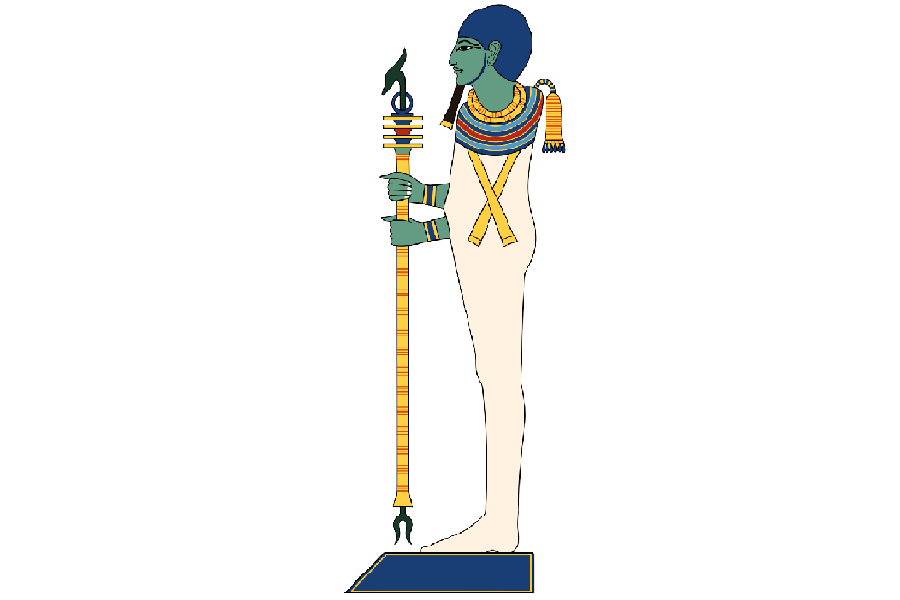
Realm(s): crafts, artisans, architects, creation
Major Temple: Memphis
In the Old Kingdom capital of Memphis, Ptah is by far the most revered of the Egyptian gods. According to Memphite Theology, it is believed that Ptah had been the one who had made Atum, a solar deity, by first creating him in his heart, then by speaking his name out loud with his tongue and teeth. It was by the creation of Atum by Ptah that the process for creation was established: first, a spiritual awareness, followed by verbal commitment, and then by action.
Ptah’s credit for creating the divine and being the world’s first god is further emphasized through the Shabaka Stone, remains of a monument from the Temple of Ptah in Memphis, which establishes him as “Ptah, the Great, that is the heart and tongue of the Ennead.”
The Ennead (also referred to as “The Great Ennead”) are a group of nine significant deities within the Egyptian pantheon. It is composed of Atum and his descendents, including his children, Shu and Tefnut; their children, Geb and Nut; and then finally their children, Isis, Osiris, Set, and Nephthys.
As far as appearances go, Ptah is shown to be a man with green skin, a bright blue cap crown, and a straight beard. He is also dressed in a mummy’s shroud with his hands and head exposed. His hands grasp a staff with the djed and ankh on top of it, which represents his connection to the eternal and to stability.
The green skin is a physical trait that can be seen in other Egyptian gods besides Ptah, most notably Osiris, to symbolize their relation to life and rebirth.
Aten – A Sun God
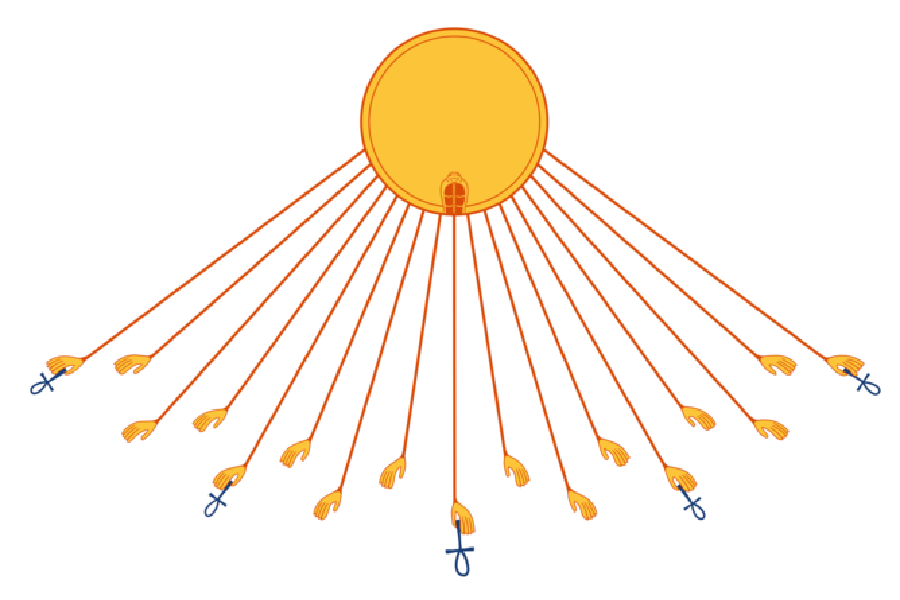
Realm(s): sun disc, sunlight
Major Temple: el-Amarna
It is safe to say that Aten was one of the least popular of the ancient Egyptian gods. Pharaoh Akhenaten took control of Egypt in 1353 BCE and decided that the Egyptian religion needed some revamping.
If you asked the new pharaoh, worshiping gods and goddesses was out. Instead, monotheism was all the rage. Within a decade of ascending to the throne, Akhenaten encouraged the defacing of other sun god temples, as well as the erasure of any mentions of “other gods.”
Aten was more than a sun god now. He was practically a creator god since everyone relied on the sun’s light and energy. At the capital of el-Amarna in Upper Egypt, Aten’s signature sun disk and rays were frequent sightings.
As you could probably imagine, ancient Egyptians did not take kindly to the sudden departure from polytheism, especially once Akhenaten began to crack down on the worship of other gods near the end of his reign. At some point in time following Akhenaten’s successors, temples dedicated to Aten began to be demolished.
Anubis – The Jackal God of the Dead
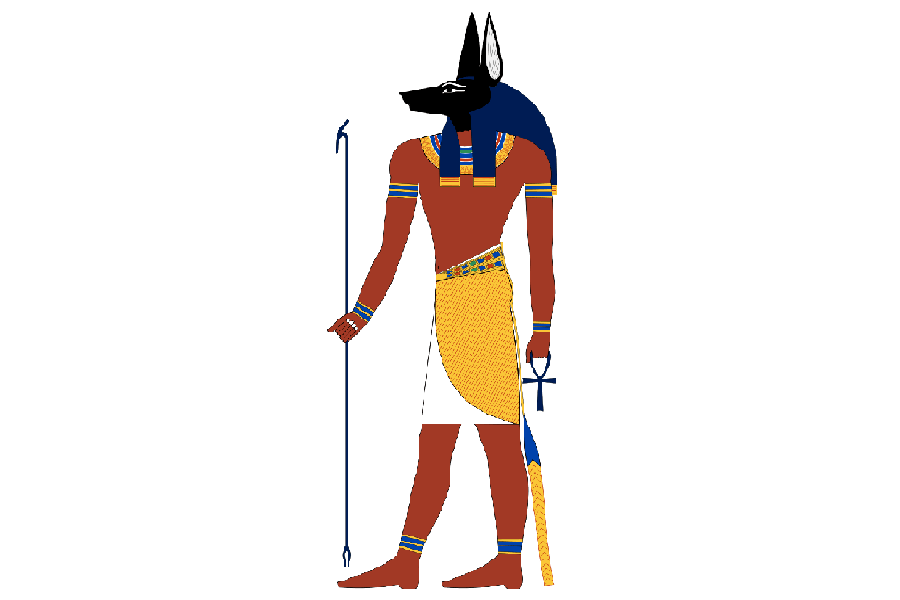
Realm(s): death, mummification, embalming, afterlife, tombs, cemeteries
Major Temple: Cynopolis
Although he strikes an imposing figure, Anubis isn’t as bad as he seems. As a funerary overseer, the god of death, and the patron god of lost souls, Anubis played a central role in ancient Egypt’s processing of life, death, and rebirth.
Appearing in most iterations as a man with the head of a black jackal, this god of the dead represented rebirth, with his dedication to the embalming process further cementing his role in the vibrant culture of ancient Egypt. Outside of his traditional realms, the Book of the Dead additionally claims that Anubis would weigh the hearts of the deceased in the Hall of Two Truths against the ostrich feather of Ma’at.
Bastet – The Goddess of the Moon and Cats; Once a War Lioness, Always a Gentle Cat Goddess
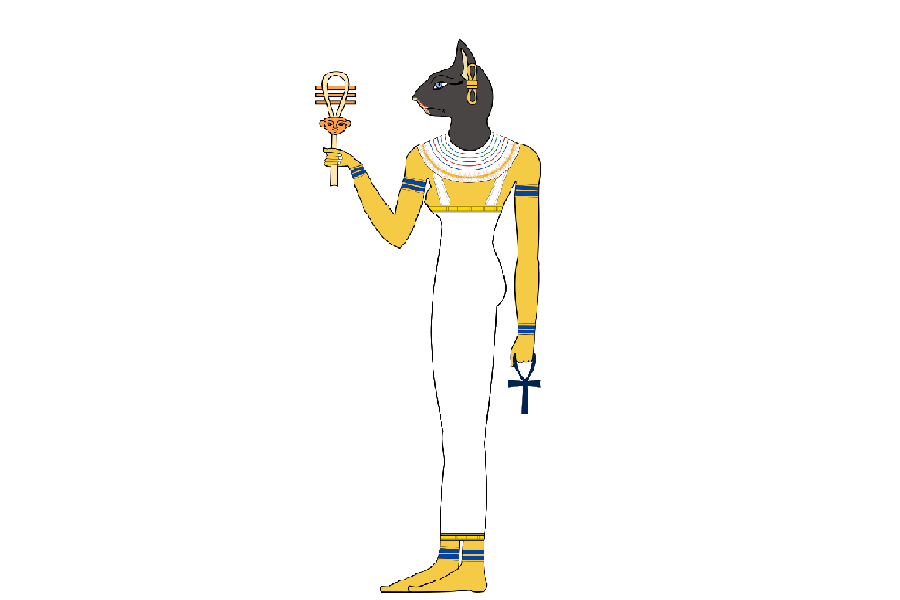
Realm(s): domestic harmony, the home, fertility, cats
Major Temple: Bubastis
The lion-headed goddess Bastet is not always the agreeable type. Rather, she was originally worshiped as a war goddess, famous for her ferocity.
Over time, Sekhmet developed into the violent aspect of Bastet, while Bastet became associated with domesticity; as this separation occurred, Bastet began to be drawn as a woman with the head of a black cat rather than her original lioness form.
The shift in her appearance from a lioness to a house cat signified her internal change: the progression of bloody impulses to controlled calm.
READ MORE: Egyptian Cat Gods: Feline Deities of Ancient Egypt
Sekhmet – A Warrior Goddess and the Goddess of Healing
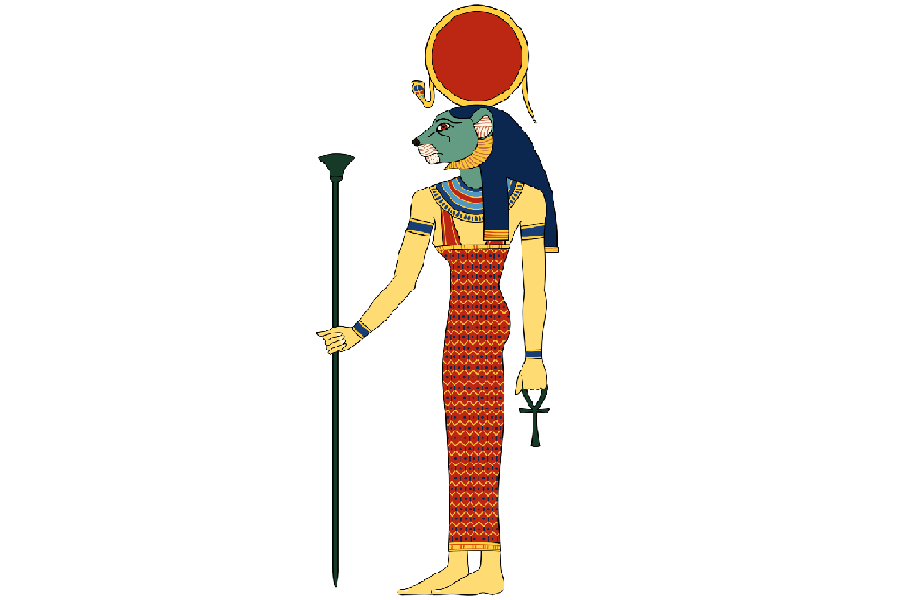
Realm(s): war, destruction, fire, battle
Major Temple: Memphis
As another one of many cat gods worshiped in the ancient Egyptian religion, Sekhmet was described as a lion-headed goddess with a human body. A war goddess through and through, she was known by her devout worshippers as the destroyers of Ra’s enemies.
Depictions of Sekhmet’s appearance show her to be a lion-headed woman wearing a solar disk and a uraeus. These symbols can be frequently seen on other gods worshiped in the Egyptian pantheon, with the uraeus representing their divine authority over man, and with the solar disc harkening back to the sun god Ra and his power.
In one myth, Sekhmet (acting as the Eye of Ra) was sent to punish mankind for plotting against Ra. She was ruthless and loyal to Ra, which made her a frightening enemy to have.
Thoth – The Good of the Moon, Reckoning, Learning, and Writing
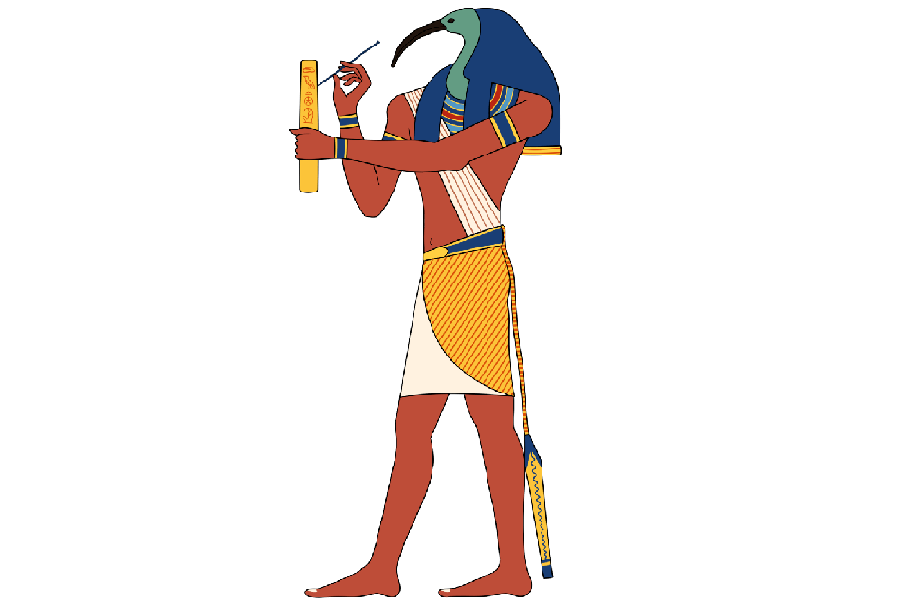
Realm(s): writing, spoken language, education, wisdom, the moon
Major Temple: Dakka
In ancient Egypt, Thoth was the god to go to if you need some sound advice. Notably benevolent and wise, Thoth was the inventor of Egyptian hieroglyphics and language. On top of this, he practically created astronomy (hence his connection to the moon).
Furthermore, Thoth was the husband of Ma’at — yes, the Ma’at that everyone is worried about throwing off balance — and would take the form of the ape Aani in Duat to announce when a deceased individual’s heart was aligned with the feather of Ma’at.
For just a taste of Thoth’s long list of accomplishments in Egyptian myth, he is credited with creating the 365-day calendar by gambling with the literal moon. Also, he plays a pretty key role in the myth surrounding Osiris’ death; as it turns out, he gave Isis the words to the spell that would resurrect Osiris for the night.
In most drawings, Thoth is depicted as an ibis bird with a sloped head, or as a baboon.
Khonsu – The God of the Moon and Time
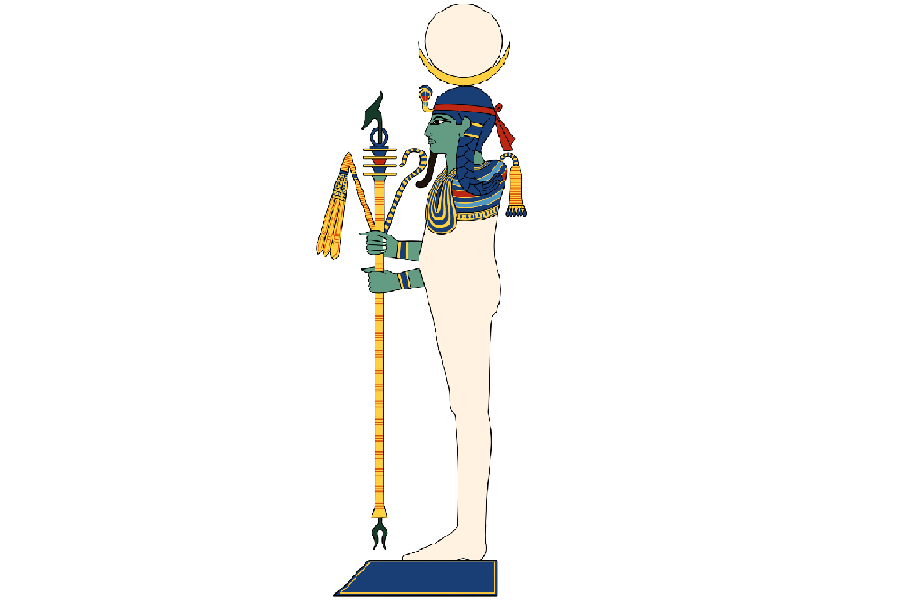
Realm(s): the moon
Major Temple: Karnak
So: Khonsu.
He’s easy to miss since sometimes he is absorbed by Thoth by appearing as a lunar baboon, or mistaken for Horus when depicted as a falcon god. Despite these stumbles, Khonsu is undeniably a major deity in Egyptian religion. After all, he marks the passage of time, and, well, he’s the moon. He won a gambling bet against Thoth and helped to extend the calendar by five more days as a result.
When in his human form, Khonsu is most frequently shown to be an identifiable youth with a sidelock of hair. Otherwise, he has been drawn as both a baboon and a falcon in multiple texts.
Hathor – The Goddess of Peace, Love, and Fertility
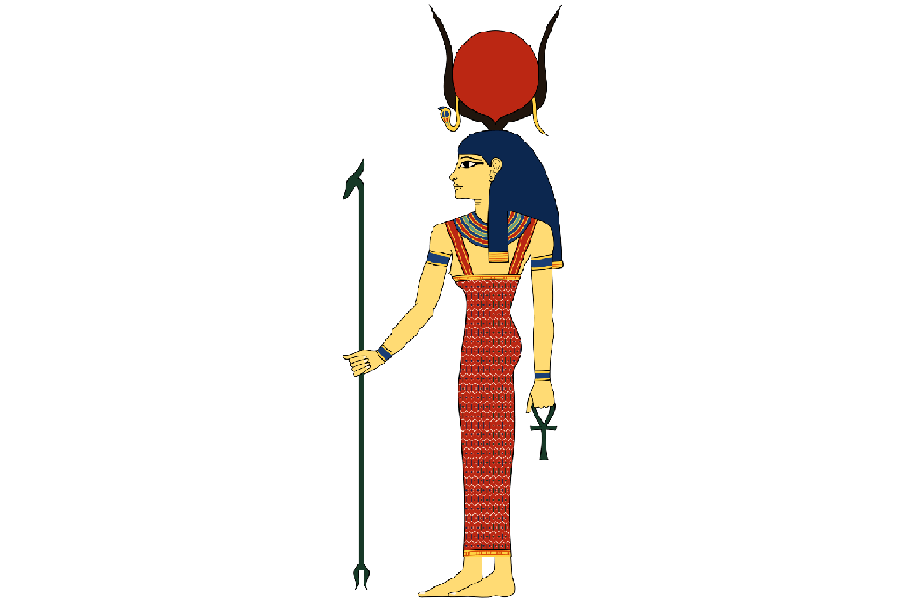
Realm(s): love, women, the sky, fertility, music
Major Temple: Dendarah
Hathor is a celestial cow goddess that is worshiped alongside Horus, her husband, and other consorts at her cult center in Dendarah. Described as the mother of pharaohs through her divine connections to both Horus and Ra, she is viewed largely through a maternal lens when translated over to other cultures, much like the mother goddess herself, the hippopotamus Taweret.
During the New Kingdom, Hathor became revered amongst women who wanted to become pregnant, as well as by mothers seeking protection for their children. She also had quite the following in the arts, particularly music, since it fell into her realm of influence.
In most cases, Hathor is noted to be a woman with a horned headdress and a solar disk, wearing a gown of red and turquoise (a semi-precious stone that is largely associated with the goddess). On another hand, she has been drawn as a large cow with the image of a solar disc between her horns, representing both her royal and maternal ties.
Sobek – A Crocodile God of the Nile
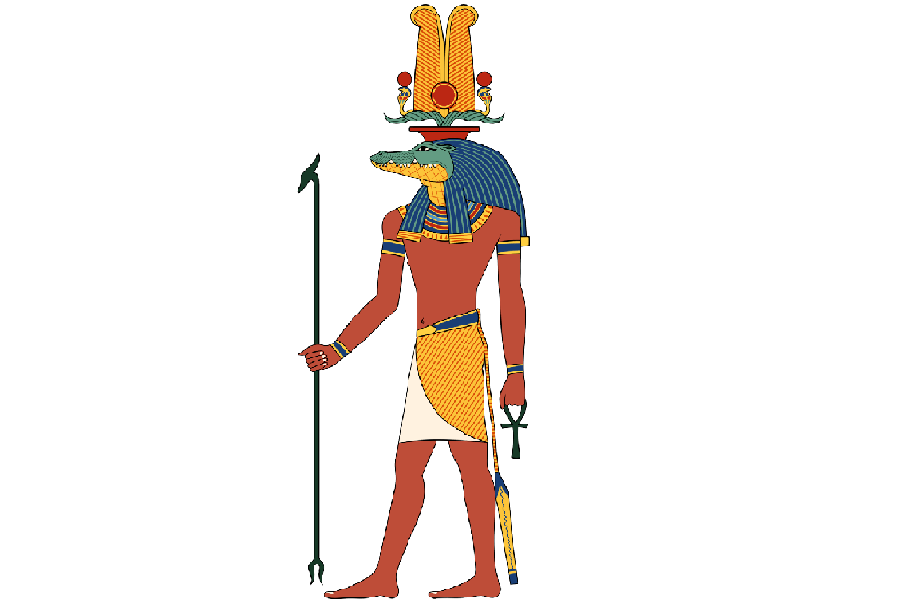
Realm(s): fertility, water, crocodiles
Major Temple: Kom Ombo
A crocodile and water god worshiped alongside Hathor and Khonsu, Sobek is credited with keeping the crocodiles of ancient Egypt at bay, controlling running water, and ensuring the fertility of the land and the people that prayed to him. He was worshiped more so out of appeasement than anything, since crocodiles were (and arguably, still are) a major predator in Egypt, and to have the god of them be upset with you would be a recipe for disaster.
READ MORE: Who Invented Water? History of the Water Molecule
Neith – The Goddess of the Cosmos, Fate, and Wisdom
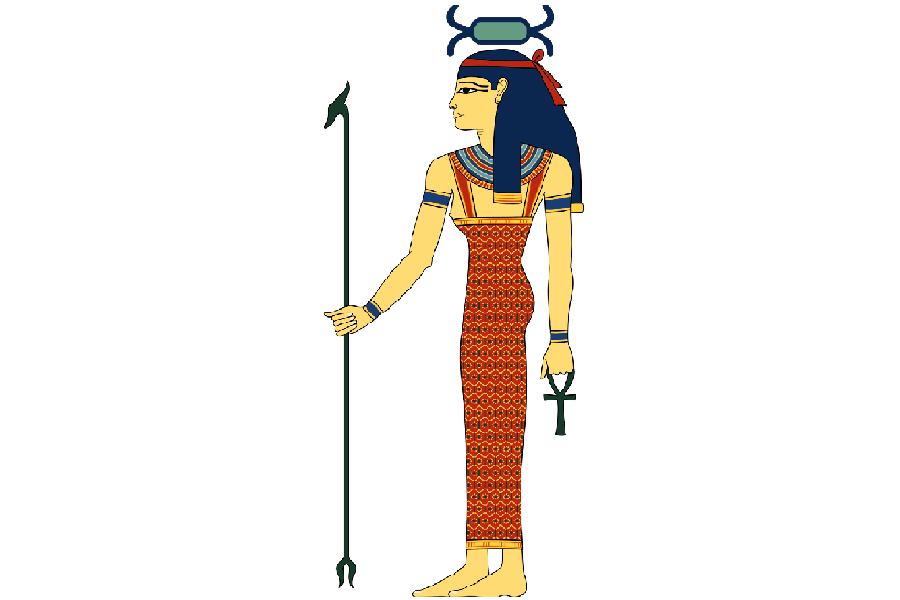
Realm(s): wisdom, weaving, war, creation
Major Temple: Sais
Remember how the creation myth in ancient Egypt could change, depending on the region to better suit the beliefs of the inhabitants? Well, it has happened again.
In Esna cosmology, Neith, a respected goddess of weaving and war with ties back to the Predynastic Era, is claimed to have woven the Earth and to be the divine mother of the sun god Ra. This would make Neith inherently connected to the primeval waters of chaos from which Ra is said to have emerged, so it is no wonder that when she spit in it that Apep was created.
Whoops.
Apep – The Giant Serpent Deity of Chaos
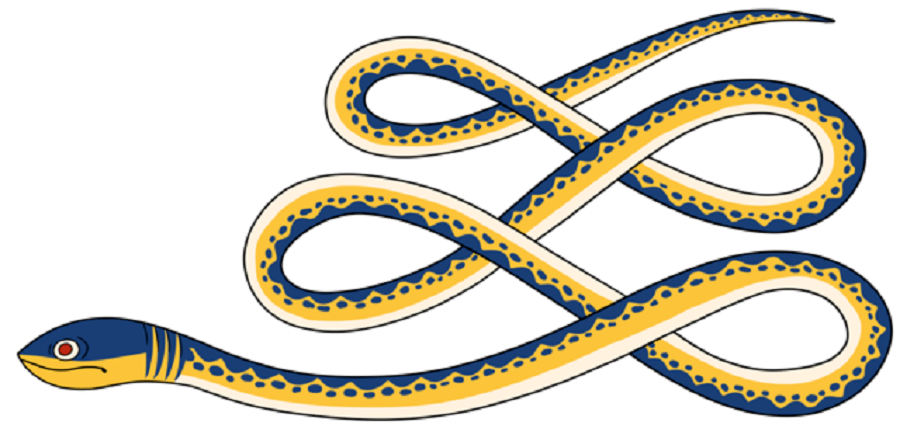
Realm(s): chaos, destruction, imbalance
Major Temple: None
For being a giant, evil serpent that outwardly opposed Ma’at and Ra, it is no surprise that Apep wasn’t really worshiped in ancient Egypt. Instead, there were religious rituals dedicated to ensuring his defeat, with the most familiar one including the ritualistic burning of a figure of Apep, which was meant to ward off his encroaching chaos for another year.
So far, he is one exception to the “snakes are a sign of divine authority” rule.
Egyptians of the time believed that Apep would lurk just out of reach of the sun, waiting to intercept Ra’s solar barque on its journey. It was said that he had a hypnotic gaze and that his movement alone could cause earthquakes.
Wadjet – The Goddess of the Red Crown
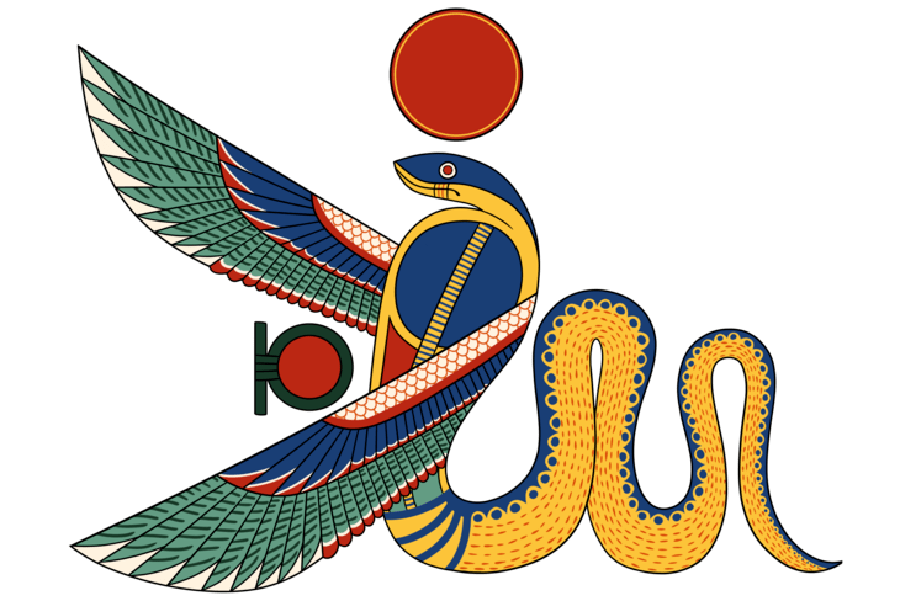
Realm(s): Lower Egypt, childbirth
Major Temple: Imet
This cobra goddess was the patron god of Lower Egypt. Usually, she was shown alongside the patron vulture goddess of Upper Egypt, Nekhbet, when the two were used to show a king’s rule over all of Egypt.
In Egyptian myth, Wadjet was identified to have been the one to act as a nurse to Horus when Isis and he were hiding in the marshes along the Nile Delta from Set. In addition to this, when Horus grew and became king himself, Wadjet and Nekhbet were there to act as his guard.
Nekhbet – The Goddess of the White Crown
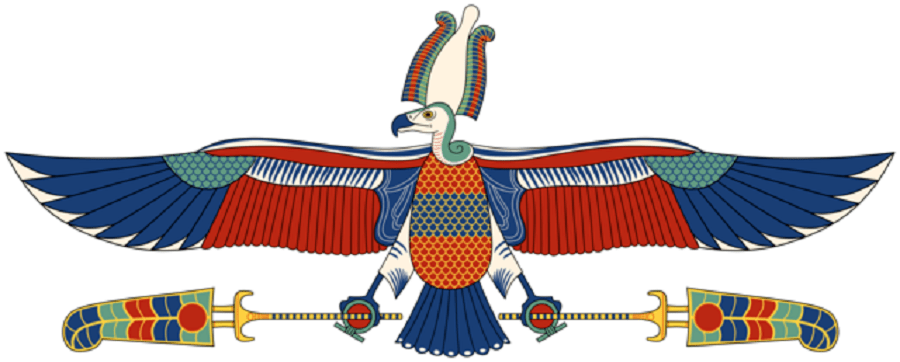
Realm(s): Upper Egypt, kings
Major Temple: el-Kab
This vulture goddess was the patron god of Upper Egypt prior to its unification. She had a particular hand in protecting the rulers of the realm, with her impressive wings acting as shields.
After the ascension of Horus in the Osiris myth, she, along with her counterpart, Wadjet, became his sworn guard to protect him from conspirators that were loyal to Set.
Khnum – The God of Water, Fertility, Reproduction
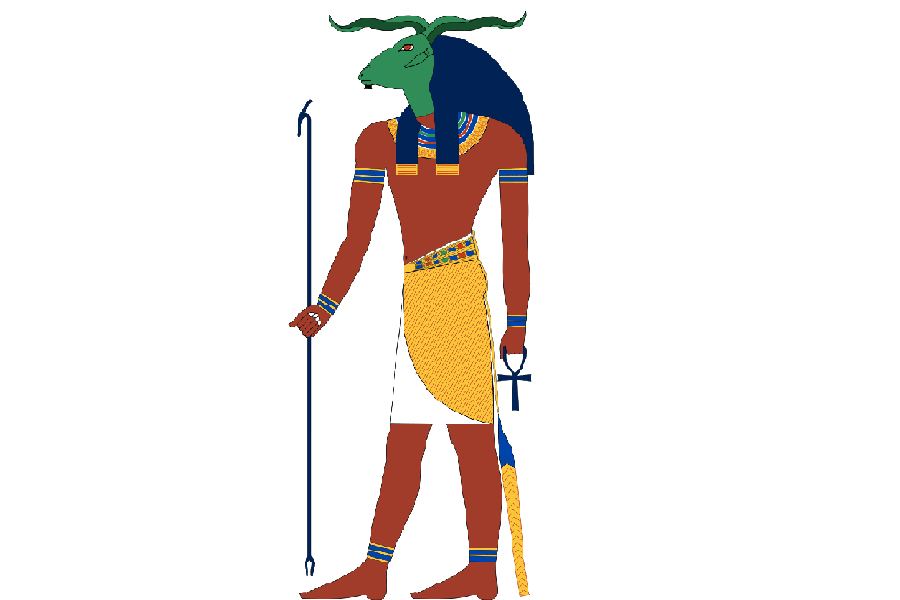
Realm(s): water, fertility, reproduction
Major Temple: Esna
A ram-headed god that was more popular than Ra? It’s more likely than you think!
Khnum’s popularity was through the roof in the First Dynasty because he was credited with creating the Nile – the life-giving river itself – and humankind. As his worshippers would explain it, Khnum made humans out of the abundant soil of the Nile River on his potter’s wheel, while he carved the river out with his hands. Otherwise, Khnum is still active in the pottery scene, molding babies from clay and placing them in their mother’s wombs to be born.
This creation myth circles back around to Khnum’s connection to both water and fertility, since the silt run-off from the Nile is abundantly fertile, and of the humans, he made from that soil.
In most paintings that are intended to show him, Khnum is a man with the head of a ram with twisting horns. Both black and green are associated with Khnum, representing fertile earth and vegetation.
Mafdet — A Protector of the People and Pharaohs
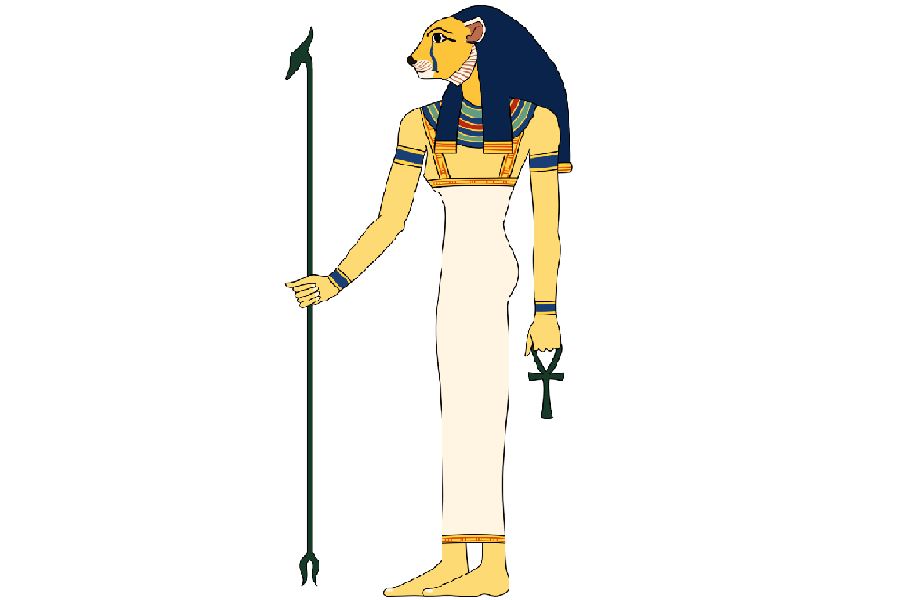
Realm(s): capital punishment, the law, kings, physical protection, protection against venomous animals
Major Temple: Unknown
Mafdet has quite a few notable roles in various myths, though her position as a guardian rarely wavered (and if it did, she would be established as a ruthless executioner instead).
For example, she is a member of Ra’s entourage on his journey to Duat to fight Apep, guarding him against monsters. Likewise, she watched over and protected the pieces of Osiris’ body from malicious forces until he could be resurrected by Isis.
Mut – A Sky Goddess and Great Divine Mother
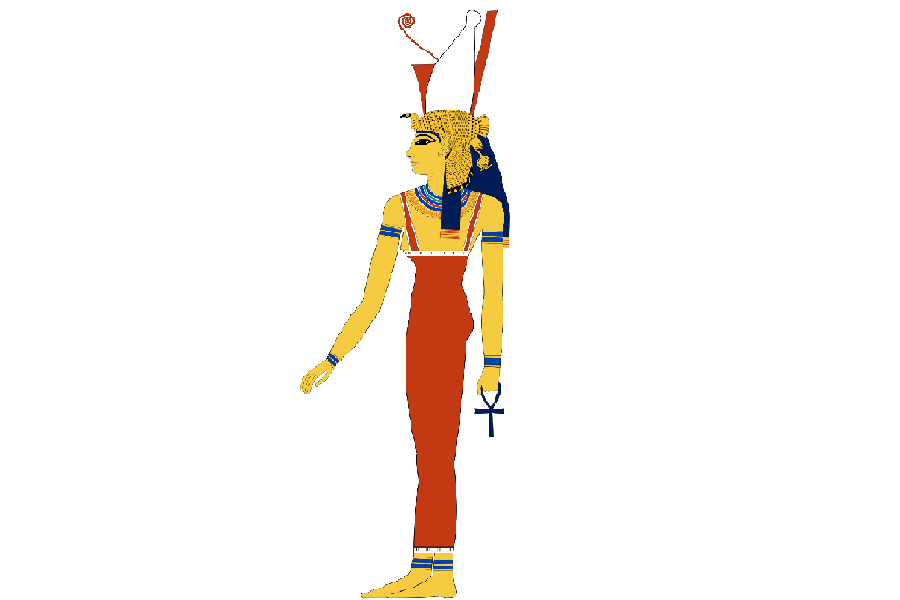
Realm(s): creation, motherhood
Major Temple: Southern Karnak
With a name that means “mother,” of course Mut has to be a mother goddess. She was best known as the dedicated wife of Amun-Ra and the mother of the lunar god, Khnosu, despite her not being acknowledged as the consort of Amun-Ra until the Middle Kingdom.
At the Temple of Karnak in Thebes, Amun-Ra, Mut, and Khonsu were collectively worshiped as the Theban Triad.
In artistic depictions, Mut is imagined as a woman with vulture wings. She wears the towering double crown of a unified Egypt, holds the ankh, and has the feather of Ma’at at her feet.
While the double crown is saved for especially influential gods, the female Pharaoh Hatshepsut began the practice of depicting Mut with the crown, largely because of the connection she felt to her.
Anhur – The God of War and Hunting
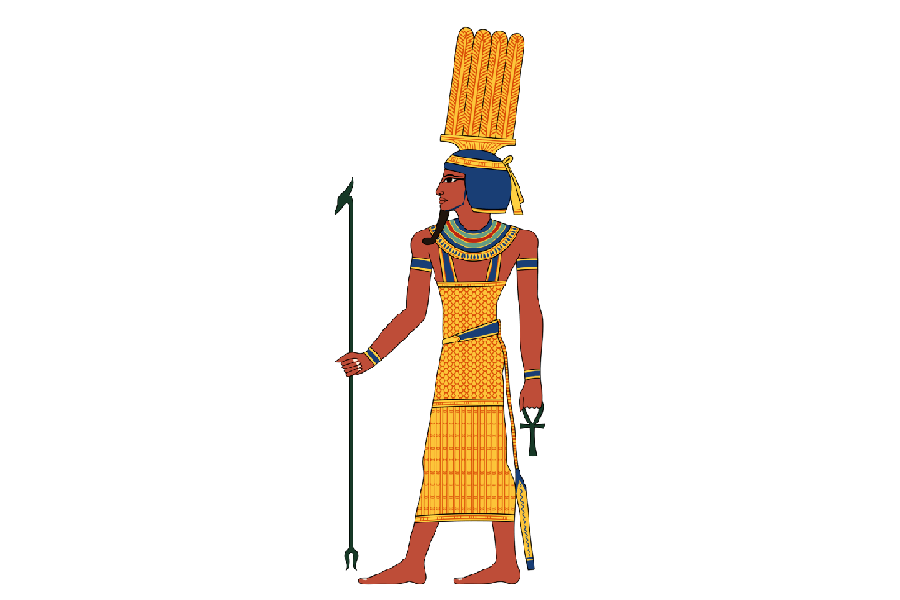
Realm(s): hunting, war
Major Temple: Thinis
First and foremost, Anhur is known to be a war god. One of the titles he held was “Slayer of Enemies,” which isn’t a title that is given: it is earned. He was the patron god of royal warriors within Egypt’s army and was honored through mock battles.
However, although many times related back to war, Anhur is one of the Egyptian gods that is renowned for his tracking abilities. He tracked down his own wife from Nubia, the Nubian deity Mehit, and brought her back to Egypt after winning her affection.
While the meaning of his name (“One Who Leads Back the Distant One”) was as impressive as his title, his appearance only placed further emphasis on the grandeur of this particular god. A man with a beard and a towering four-feather headdress wielding a lance, Anhur occasionally was painted to have the head of a lion to represent his strength.
Taweret – Protective Goddess of Childbirth
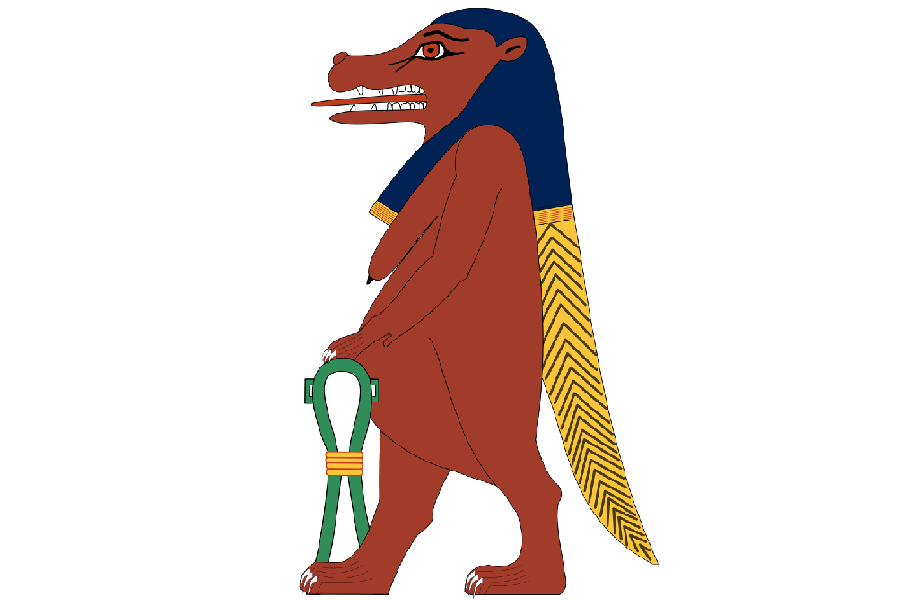
Realm(s): protection, childbirth, fertility, pregnancy
Major Temple: Karnak
A hippopotamus goddess revered for her protective prowess. She likely originated during Predynastic Egypt, with a boom in popularity during the New Kingdom – remnants of her worship withstood the test of time in Amarna, the cult center of Aten.
Likewise, during the New Kingdom, Taweret stepped into the role of a funerary deity, thanks to the goddess’s life-giving powers. Her cult spread throughout the ancient world, and she took particular significance in Crete’s Minoan religion.
Minoans were a civilization that was centralized in Crete during the Bronze Age. They preceded the Mycenaean Greeks, with their collapse coming around the beginning of the Greek Dark Ages (1100 BCE – 750 BCE).
READ MORE: 41 Greek Gods and Goddesses: Family Tree and Fun Facts
In most of the places where Taweret’s influence spread, she became identified as a mother goddess, who was heavily associated with fertility and childbearing. Her image depicted her as an upright hippopotamus with low-hanging breasts, lion-like paws, and a crocodilian tail.
Shai / Shait – The God of Fate and Destiny
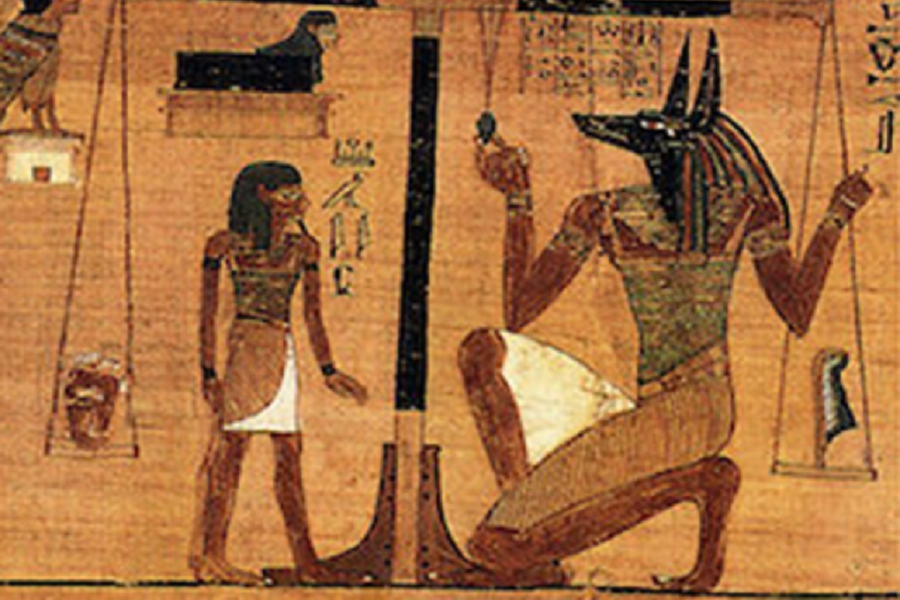
Realm(s): fate, fortune, destiny
Major Temple: Unknown
Shai is a unique god; they are both born, and already attached to individuals as their destiny, and they exist separately as an omniscient force. Initially, an unseen concept, the name of this god changes based on the sex of the individual that is being referred to.
For masculine, their name would be Shai. For feminine, their name would be Shait.
Acting as fate itself, the god Shai had a significant cult following during the New Kingdom, although little is known of them and much of their practices remain a mystery.
Haurun – A Protector God From Canaan In Ancient Egypt
Realm(s): herdsmen, medicine, wild animals, destruction
Major Temple: Giza
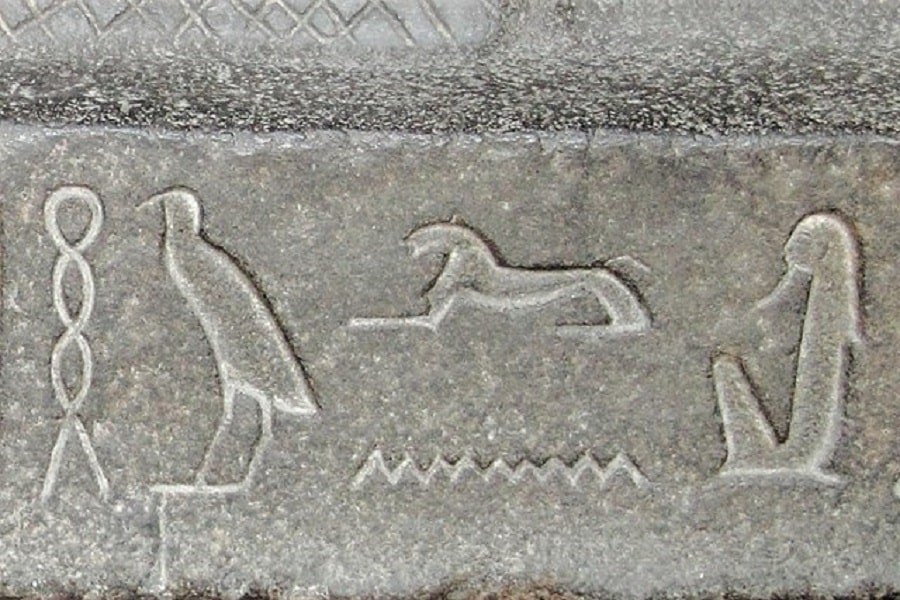
A Canaanite God of destruction turned Egyptian protector god, Haurun is quite a colorful character. In Canaan, Haurun was believed to have been the god to have planted the Tree of Death. During this time, he was known to take on the appearance of a snake.
Egyptologists believe that Haurun’s worship spread into ancient Egypt by workers and merchants from Canaan, a region that today encompasses parts of Jordan, Gaza, Syria, Lebanon, and the West Bank. Canaanite workers that were employed for the construction of the Great Sphinx of Giza believed that the massive statue bore similarities to the serpent god, and they promptly built a shrine at the base of it.
As his cult spread, Egyptians began to associate Haurun with healing and would invoke his name in a prayer for protection while hunting. It is also said that Haurun had influence over wild animals and predatory animals, which led herdsmen to call upon him for protection.
Unut – The Goddess of Snakes and Fast Travels
Realm(s): snakes, speedy travel
Major Temple: Hermopolis
As for Unut, she was a minor goddess during Predynastic Egypt. In her earliest iterations, Unut was commonly symbolized as a snake and worshiped alongside Thoth at Hermopolis.
Enigmatic at best, Unut likely had little associations outside of Upper Egypt’s 15th nome, or district, whose capital was located at Hermopolis.
When examining her portrayal at Hermopolis, she would be frequently shown alongside Thoth, the primary patron deity of the city. From this information, it can be speculated that her role was that of a regional patron goddess whose localized worship likely predates that of Thoth, similar to Hatmehit, the fish goddess worshiped in Djedet, whose local worship came before the more widely accepted Mendisain Triad.
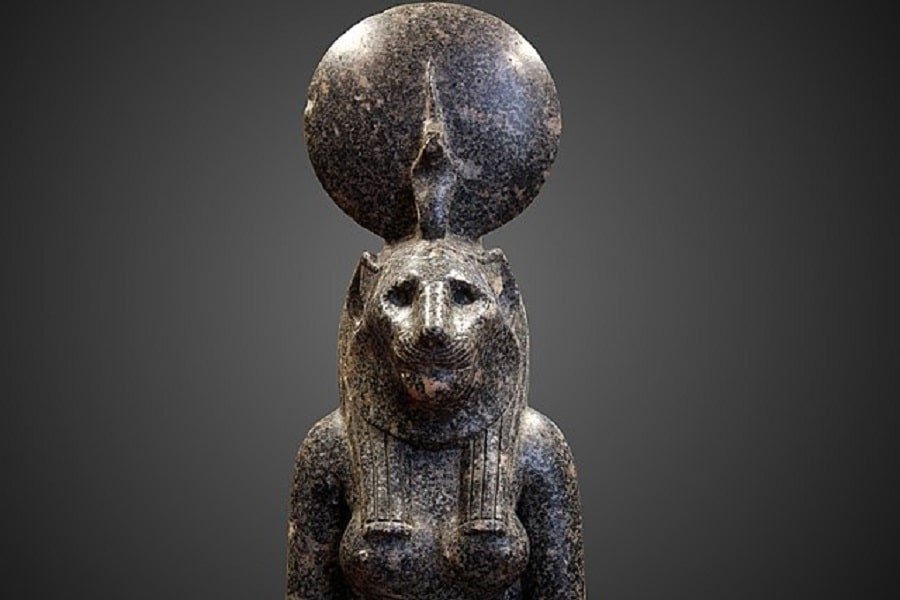
Over time she began to be shown as a woman with the head of a hare or, on rare occasions, a woman with the head of a lioness. Worship of Unut would be adopted by the cult of Horus and the cult of Ra at later points in Egypt’s history.
Wepset – Serpent Goddess of the Eye
Realm(s): protection, kings
Major Temple: Biga (speculated)
Wepset was a personification of the uraeus cobra, and a member of the Eye of Ra. An ancient serpent and protector goddess, Wepset was known to be a significant guardian over the lives of kings and pharaohs throughout Egypt’s history.
Ihy – Like Mother, Like Son
Realm(s): the sistrum
Major Temple: Dendarah
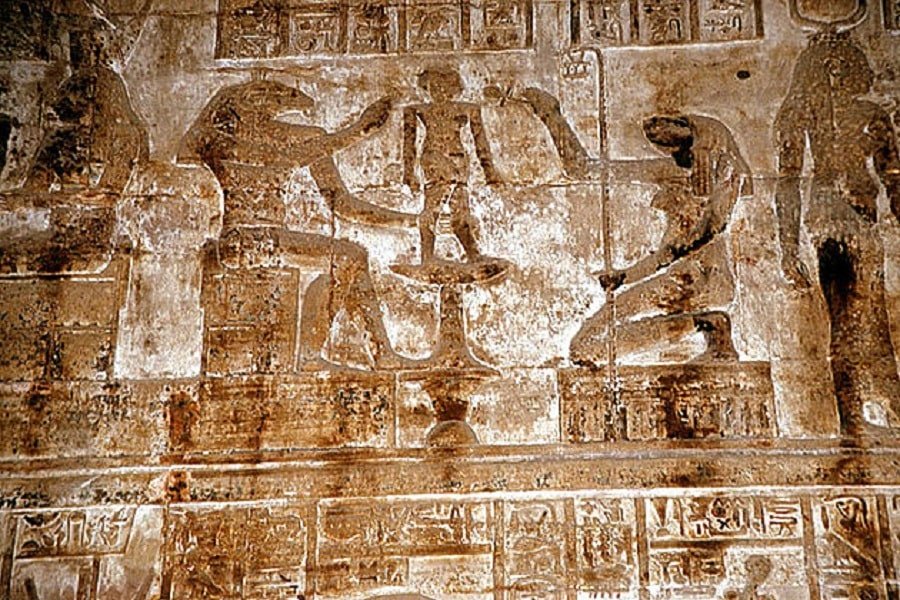
One of the lesser-known Egyptian gods and goddesses, Ihy is the embodiment of the joy that playing the sistrum brings. He is well-known to be an infant with curly hair and a necklace, holding the instrument like a rattle.
The hand-held, percussion instrument has ties to his mother, Hathor, the goddess of love, fertility, and music.
this is good use this to learn about the Egyptians!!!