Iran is the world’s 18th most populous country, and it’s a major player in both Middle Eastern and world politics. However, most mentions of Iran in the news focus on some of the many problems the country is facing, such as its controversial nuclear program, undemocratic government, and harsh gender divide.
But Iran, or Persia, as it was called until 1935, was once the second-largest empire on Earth, in the second half of the 6th century B.C.E., its power had spread reaching from the Indus Valley to Northern Greece and from Central Asia to Egypt, and it has played an important role in the world since ancient times.
The history of Iran starts with the Achaemenid Empire, which began in the 6th century BCE (c. 550) and lasted until Alexander the Great marched his armies through Persia in 330 BCE. However, after the fall of this great empire, Persia continued to be a strong regional and global power, largely because of its strategic position along the trade routes connecting Europe and Asia.
Because of this, Iran still holds an influential position on the global stage especially in the Middle East. But to truly understand this country, it’s important to first look at its role in the ancient world. This review of Persian history starts by locating Persia on a map and discussing the origins of Persian people, and then it highlights some of the key developments in Persian history, as well as its role in shaping the world we live in today.
Table of Contents
Where is Persia?
Persia was the ancient name for the territory we now recognize to be the modern-day nation of Iran. It is located just to the east of the Persian Gulf, on a piece of land known as the Iranian Plateau.
The first Persian capital city, Pasargadae, which was founded sometime in the 7th century BCE, is located in the modern-day region of Fars, which is in the southern part of today’s Iran. Persia, then, refers to the area immediately surrounding Pasargadae.
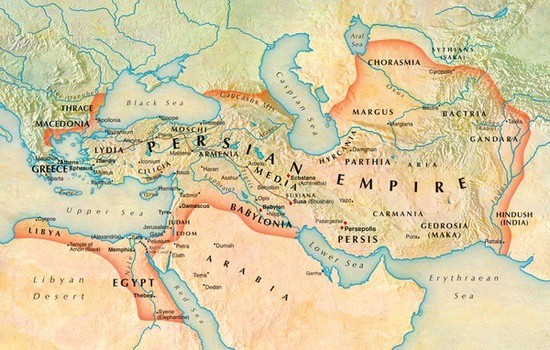
Other cities, such as Persepolis (former capital city of Iran) and Susa, other Persian capitals, were founded later on and became important political and cultural centers within Persia. These three cities are marked on the map below with red stars, starting with Susa in the north, then Persepolis, and then Pasargadae.
However, during ancient times, Persia would have included nearly all of Mesopotamia, as well as parts of modern-day Egypt, Turkey, Greece, Armenia, Turkmenistan, and Afghanistan, among others. The map below shows the extent of the Persian Empire at its peak, as well as the territory surrounding the capital that was the original Persia.
Persian People
Persians are a subgroup of the Iranians, which is an ethno-linguistic group used to describe a wide range of different people who all spoke some variation of the Iranian language. Iranians began living in the region that is now Iran most likely in the 10th century BCE, and they are believed to have been the descendants of certain Aryan groups living in northern Europe.
The Iranian language is part of the Indo-European language group, which connects diverse languages such as Hindi, Spanish, German, French, Punjab, and many others.
Today, we understand Persian people to be those who speak Persian, which is often called Farsi, and/or who identify with Persian way of life. Over half of the population of Iran are Persian, which amounts to about 25 million people, but Persian people can be found living all throughout Western Asia, specifically in Afghanistan, Tajikistan, Uzbekistan, and Azerbaijan. In fact, some of the most prominent figures in Persian history came from areas outside of the region known as Persia.
READ MORE: The Mongol Empire
The Achaemenid Empire
One of the main reason we consider Persia to be an important part of ancient, as well as modern, history is because of the Achaemenid Empire, which was the first dynasty in Persia, and also the one that helped Persia conquer one of the largest empires in history.
The Achaemenid Empire began when King Cyrus II (the great-great-grandson of the first Persian king, Achaemenes)who would later be known as Cyrus the Great, the 5th century Achaemenid king of the Persian Empire, united the various Persian tribes living on the Iranian plateau. When he was crowned king of Persia in 559 BCE, Cyrus II was little more than a tribal leader of the Parsua (Persian) people who lived in the south of present day Iran.
He immediately waged war against the Medes, an ethnically similar people who had built a strong kingdom throughout northern and western Iran, Turkmenistan and Afghanistan, and they were conquered by 550 BCE. Afterwards, Cyrus the Great immediately set his sights on the other major powers of the region, mainly Lydia, which is located in modern-day Turkey, and Babylonia, which held the territory in between the Tigris and Euphrates Rivers known as Mesopotamia.
Ancient Persia Trivia #1
At its peak, the Persian Empire occupied 5,500,000 square kilometers. If it existed today, it would be the 7th largest country in the world (behind Australia, which is 7,692,000 square kilometers) and double the size of the 8th largest country (Argentina, which is 2,780,000 square kilometers).
By 547 BCE, Cyrus the Great had subjugated these two powerful kingdoms, and the Persians became the dominant force in the ancient world. Cyrus the Great was unlike any other Persian emperor because he showed mercy toward the cities and kingdoms he conquered. He was known to spare the life of a defeated king so that the king could guide Cyrus the Great in successfully ruling over the captives’ subjects.
Cyrus the Great respected the customs and religions of the lands he conquered. In fact, what is described in the bible as the ‘Edict of Restoration’ (Isiah 45: 1) was made by Cyrus the Great. The edict had lasting legacy in the Jewish faith.
His son, Cambyses II, who became the Persian king in 525 BCE, managed to extend the Persian Empire out into Egypt and Libya, as well as parts of Greece.
The Rise of Darius I
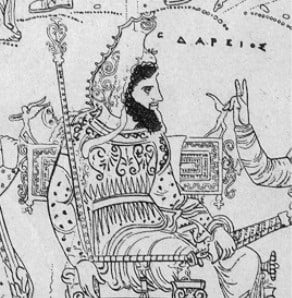
When Cambyses II died in 522 BCE, just seven years after becoming king, he had no heir. A brief succession crisis ensued, and it resulted in the coronation of Darius I, also called Darius the Great,who claimed relation to Cambyses and the royal lineage through a distant ancestor. Some time between his coronation and his death, Darius the Great left a tri-lingual monumental relief on Mount Behistun (currently in western Iran), which was written in Elamite, Old Persian and Babylonian. The inscription begins with a brief autobiography including his ancestry and lineage. Darius the Great’s ascension to the throne marked an important moment in the history of the Persian Empire for three reasons:
- It ushered in the era of Persian satraps. These were essentially regional governors who had extraordinary power. The success of these institutions, along with the Persian Empire’s commitment to building roads and raising armies, is what helped the Persians remain the dominant force in the region for so long.
- It launched the Greco-Persian War. This conflict, which lasted roughly 50 years, played a major role in the history of the Persian Empire, largely because it ended their attempts to expand westward through Greece.
- Susa became the Persian capital. Located further north than Persepolis and Pasargadae, Susa was chosen to be the capital city of the Persian Empire because it was connected to the King’s Road, also constructed by Darius I, which made it easier for the Persian monarch to move about and govern his empire.
READ MORE: The Satraps of Ancient Persia: The Guardians of the Realm
The Greco-Persian War
When Darius I took over as the Persian king in 522 BCE, he spent most of his time consolidating the gains of his predecessors. However, by the end of the 6th century BCE, he began to look for ways to expand the Persian Empire, and Greece was a natural target. Its rich culture and relative lack of political cohesion made it a tempting prize.
Darius I attempted the first Persian invasion of Greece with the support of a Greek tyrant, Aristagoras, but their attack failed miserably. Aristagoras, fearful that his fellow Greeks would seek revenge, and that Darius I would try to punish him, encouraged the Greeks living in Persian-controlled Turkey to revolt against Darius I, which they did. These revolts, which became known as the Ionian Revolt, took place between 499 and 493 BCE, and they ended with the Greeks sacking the Persian regional capital of Sardis.
Ancient Persia Trivia #2
At the height of its reach, the Persian Empire controlled 44% of the world’s population (49.4 million people out of 112.4 million people). For one government to control 44% of the world’s population today, they would have to rule China, India, the United States, and Indonesia – the four largest countries in the world.
Enraged at this rebellion, Darius I decided to launch a full-scale invasion of Greece. He pulled together a fleet of Egyptians and Phoenicians, and summoned his armies from all around the empire. He sent his fleet through the Aegean Sea towards Athens and Eritrea, and they reached Eritrea, burning it to the ground.
However, his army was stopped before it could reach mainland Greece, and the Greek army, although outnumbered, managed to win the decisive Battle of Marathon in 490 BCE. This effectively ended the Persian attack, and it was officially stalled when Darius I died in 487 BCE.
The Rise of Xerxes and the Battle of Thermopylae
Xerxes is perhaps one of the most well-known characters of the ancient age. He was famous for his taste in harems, and his arrogance was known throughout the land. Xerxes was the “god king,” and all who came in his way had to bow.
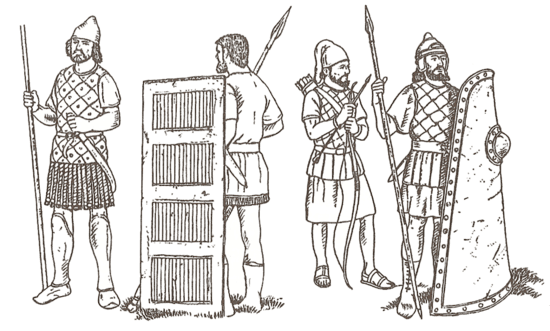
However, when Xerxes first came to power, he was not particularly interested in conquering more territory. He spent the first part of his time as emperor consolidating his realm. Revolt during this period of time was frequent, and it occupied most of a king’s time. But by 480 BCE, this had changed.
Convinced by some of his advisors that Greece must die, Xerxes summoned one of the largest armies ever. Some estimates suggest the force totaled 180,000 men. He also put together a fleet of Egyptians and Phoenicians, with the goal being to march on Athens and perhaps even Sparta, so as to bring the Greeks completely under his control.
Initially, he was quite successful. He managed to round the Thracian coast (the territory to the North of the Aegean Sea) and march down onto the Greek mainland, something Darius I had been unable to do.
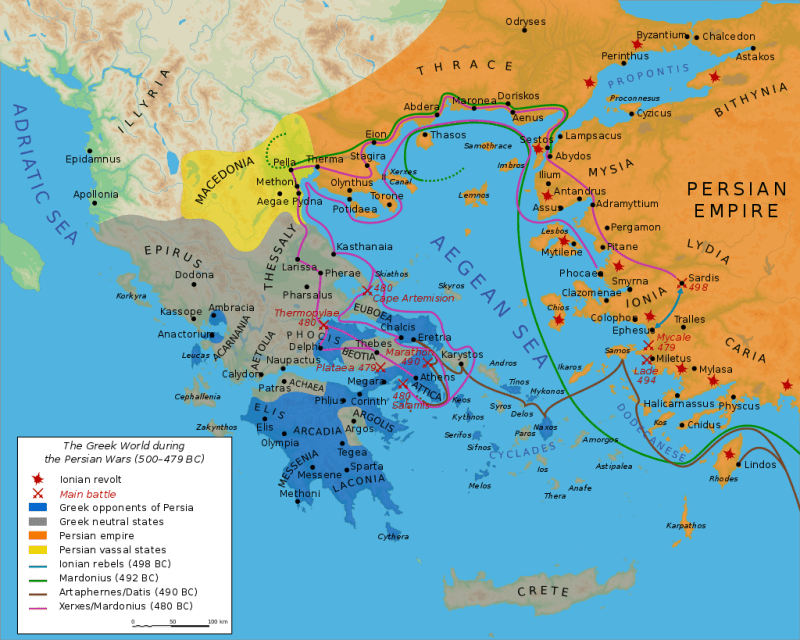
However, key defeats against the Spartan-led force at the Battle of Thermopylae (the plot of the movie 300), and against the Athenian-led navy at Plataea and Mycale, ended the Persian invasion once and for all. See the map below to learn more about Persian movements in Greece under Xerxes.
Timeline of Persian History After Xerxes
After the reign of Xerxes, the Persian Empire entered into a period of relative decline. Here is a list of the Persian kings to follow Xerxes as well as some of their accomplishments:
- Artaxerxes I (c. 467-424 BCE) continued to battle the Greeks until 450 BCE. Most of these battles, though, took place in Egypt, where the Athenian-led Delian League was supporting rebellions designed to overthrow Persian rule. He helped to negotiate the Peace of Callias, which ended the half-century conflict between the Greeks and the Persians.
- Artaxerxes II (c. 412-358 BCE) took over Persia during a period of great instability. Twelve years passed between the death of Artaxerxes I and the coronation of Artaxerxes II, and this is because of a lack of clarity over who was the rightful heir. War and rebellion defined this period, and it also defined the reign of Artaxerxes II. Most of the Persian empire was at risk, and while Artaxerxes II managed to put down most of the rebellions and restore order, he lost control over Egypt.
- Artaxerxes III (c. 358-338 BCE) presided over Persia’s last stand. He managed to once again bring Egypt back under Persian rule, and he also won victories in Asia Minor (modern-day Turkey), which helped him secure control in the region. However, he had been forced to recognize a treaty with the Greeks that protected their sovereignty, and this would set the stage for Persia’s ultimate demise.
- Artaxerxes IV, Darius III, and Artaxerxes V (c. 338-330 BCE) were the last three kings of the Achaemenid Empire, and they ruled over intense turmoil. Artaxerxes IV was king for just two years before he was killed in battle. His predecessor, Darius III, lasted just 6 years before being killed by Artaxerxes V also know as Bessus. Darius III once squared it off with one Alexander III of Macedon at the battle of Gaugamela where he failed miserably. Artaxerxes V was killed a year later by Alexander III , also known as Alexander the Great, which subjugated the Persians to the Greeks and ended this chapter of Persian history.
Persian Religion: Zoroastrianism
Today, the primary religion in Iran is Islam, specifically Shi’a Islam. However, this was not always the case. For most of Persian history, the main religion was Zoroastrianism, which is considered to be the world’s first monotheistic religion.
It is named after Zoroaster, who was a prophet that began spreading his beliefs starting in the 10th century BCE. By the time of the Achaemenid Empire, Zoroastrianism was deeply entrenched in Persian culture, and it became the empire’s official religion under Artaxerxes II (c. 412 BCE).
Ancient Persia Trivia #3
If you like wearing pants, you have the Ancient Persians to thank! At a time when the rest of the world was running around in long flowing robes and togas, the Persians moved comfortably in pants. Here’s a photo of the oldest known pair of pants.
The roots of Zoroastrianism can be traced to the ancient pagan religions of the Aryan people, but many of its central tenets are similar to those of today’s main monotheistic religions.
For one, Zoroastrianism is focused on the concept of duality, meaning that it sees the world as being locked in a struggle between good and evil, and that the end of times will come with the eventual triumph of good.
The main god in Zoroastrianism is Ahura Mazda, which translates to “Wise Lord.” It is believed that he manifests himself through divine entities, which are similar to saints in Christianity. Ahura Mazda has no evil inside, and his primary duty is to help humanity overcome the forces of evil.
In general, Zoroastrianism has three central tenets:
- Humata, Hukhta, Huvarshta, which translate to Good Thoughts, Good Words, Good Deeds
- There is only one path, the path of Truth
- Do the right thing because it’s right, and then you will see rewards later
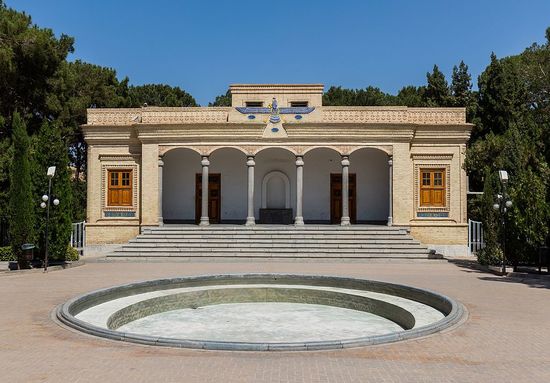
After the emergence of Islam, Zoroastrianism was oppressed, and its followers dwindled. Today, it’s estimated that there are some 200,000 Zoroastrians still practicing, mostly in Iran and India.
In popular culture, Zoroastrianism has made several appearances. German philosopher Friedrich Nietzsche’s book Thus Spoke Zarathustra, draws heavily on the faith, and more recently, Freddie Mercury, the leader singer of the rock band Queen, grew up in a home of practicing Zoroastrians.
The Persian Empire After the Achaemenids: The Parthian and Sassanid Dynasties
After the fall of the Achaemenid Dynasty, the Persians fell into the background of ancient history. They became a part of the Alexander the Great’s empire. Alexander the Great framed his campaign against the Achaemenid Empire as a patriotic retaliation for Persia’s failed invasion of the Greek mainland a century earlier. There was a great fire that started during Alexander the Great’s stay in Persepolis that some historians claim was a sign of revenge for the Persians burning of the Acropolis in Athens a century earlier. Alexander’s influence in Persia fell in C. 240 BCE, and the Persians became vassals of the Seleucid Empire. .
However, this didn’t last long, and the Persians once again became autonomous under the royal family of the Parthians, who placed their capital in northeastern Iran.
They managed to make modest territorial gains, but their main achievement was bringing Persepolis, Pasargadae, and Susa (the Persian capital under Darius I) back under Persian control. However, the Parthians were contemporaries of the Romans, and this seriously hindered their ability to expand their influence.
Ancient Persia Trivia #4
Ancient Persians kept hedgehogs as pets to help keep their houses free from ants and other bugs.
The Parthians ruled for a period of 400 years, and then they gave way to the Sassanids, who came to power in c. 224 CE. The fall of Rome meant there was territory to be gained, and the Sassanids fought frequently with the Eastern Roman empire, which eventually became the Byzantine Empire.
At one point, they laid siege to Constantinople and annexed Byzantine territory, although it’s unclear to what extent they were able to actually control these lands. Despite this, though, the Sassanids managed to extend the Persian empire considerably. The map below shows the extent of their imperial expansion.

Persian Culture During the Sassanid Dynasty
Perhaps the most significant thing to come out of these two periods in Persian history was that Persia established itself as a cultural center of the ancient world. This is due in large part to its geography, which allowed it to serve as a key trading point between Europe and Asia.
During this time, Persian paintings, sculptures, and decorative textiles (rugs and tapestries) became hot commodities all around the world, and this fueled the growth of these industries.
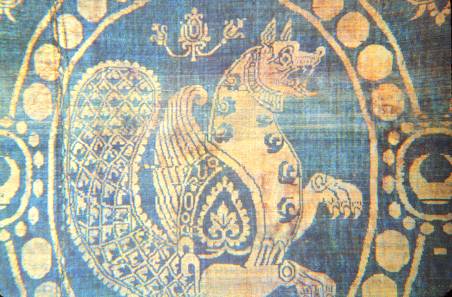
Many of us are aware of the prestige of Persian rugs, and it’s during this time that this becomes a key feature of Persian way of life. Many also claim the art that came out of the Sassanid Dynasty was a precursor to Muslim art, which would become one of the most influential artistic traditions in the whole world.
The Safavid Dynasty
After the fall of the Sassanid dynasty in c. 651 CE, the Persians became a part of the Muslim world. Their religion, Zoroastrianism, was suppressed, and they were forced to acknowledge the Muslim caliphate that was installed to rule Persia. The Arab empire would eventually fall, but Islam remains the dominant religion in the region up until the current day.
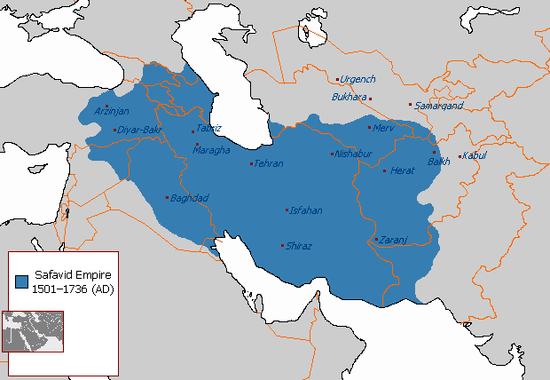
Persians regained control over their territory in 1501 with the rise of the Safavid dynasty. Their main accomplishment during this time was fortifying the Persian border with the Ottoman Empire, which helped to secure the territory that is now Iran.
The Safavid Dynasty, along with the Ottomans and the Mughals in India, were one of the Gunpowder Empires. Their mastery of this technology helped them become and remain a dominant force in the region.
The Qajar Dynasty
The Safavid dynasty lasted until 1736 when the Russians and Ottomans teamed up to topple the Persians and divide up their territory. At this point in time, the Dutch East India Company, as well as the British navy, also began meddling in the area, reducing Persian power and leading to its collapse.
However, the Persians managed to bounce back and claim sovereignty over their own territory under the Qajar dynasty, which rose to power in 1789. The Qajar family helped to create the borders of Iran we see today, and they also enacted policies that led to Iran’s modernization and industrialization.
But they were heavily criticized for how they succumbed to foreign powers, mainly the British and the Russians, and it’s argued that much of the anti-western sentiment in Iran has its roots in this moment in history. Most of Iran’s trade was controlled by someone other than Iran, and this significantly limited their ability to grow their influence.
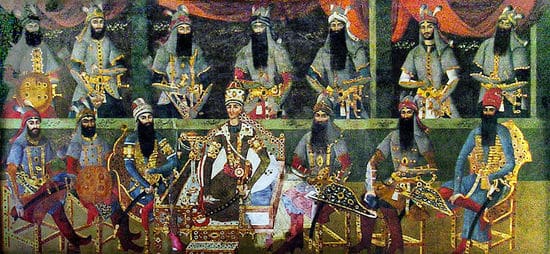
The Qajar family still exists today, but they have no power. They were forced to convert to a constitutional monarchy in the 1920s, which lasted until democracy was instituted during the Iranian Revolution of 1977.
When Did Persia Become Iran?
Persia became Iran in 1935 when the government of Persia asked all other countries to begin using the name Iran, which is the word for Persia in the Persian language. It is believed this may have been the result of Iranian ties to Nazi Germany, who would have supported this more nationalist name over a one that was technically foreign.
Conclusion
Persian history is long and complex. However, there is no doubting that the Persians are one of the great stories of humankind. They rose from practically nothing in the 7th century BCE to go on and control one of the largest empires in the world, and they have managed to survive until the present day as the modern nation of Iran. The country is still a regional power in the present day Middle East and Central Asia. Only time will tell what else the Persians have to add to the history of the world.
READ MORE:
The Crimean Khanate and the Great Power Struggle for the Ukraine in the 17th Century
Bibliography
Amanat, Abbas. Pivot of the Universe: Nasir al-Din Shah Qajar and the Iranian Monarchy, 1831-1896. Univ of California Press, 1997.
Bower, Virgina, et al. Decorative Arts, Part II: Far Eastern Ceramics and Paintings, Persian and Indian Rugs and Carpets. National Gallery of Art, Washington, 1998
Bury, J.B; Cook, S.A.; Adcock, F.E. The Persian Empire and the West in: The Cambridge Ancient History Vol. IV. Cambridge University Press, 1930
Fisher, William Bayne; Avery, P.; Hambly, G. R. G; Melville, C. The Cambridge History of Iran. Cambridge University Press.
Frye, Richard N. The Sassanians. Cambridge Ancient History Vol. 122 . Cambridge Univesity Press, 2005.
Kuhrt, Amélie. The Persian Empire: A Corpus of Sources from the Achaemenid Period. Routledge, 2013.
Nicolle, David; McBride, Angus. Sassanian Armies: The Iranian Empire Early 3rd to mid-7th centuries AD. Montvert Publications, 1996.
Olmstead, Albert Ten Eyck. History of the Persian Empire. Vol. 108. Chicago: University of Chicago Press, 1948.
Wiesehofer, Josef. Ancient Persia. IB Tauris, 2001.