Though slavery in America has long since been illegal in the United States, the ramifications of the African slave trade that almost broke the new nation are still felt throughout American society, politics, and culture today.
While the rest of the world had long engaged in the forced servitude of people throughout history, America was introduced to the first African slaves by Dutch merchants in 1619, which spiraled into more than two hundred years of economic reliability on slaves.
Recommended Reading

US History Timeline: The Dates of America’s Journey
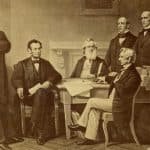
Emancipation Proclamation: Effects, Impacts, and Outcomes
How Old Is the United States of America?
However, the enslavement of Africans in the New World was just one faction of slavery in America, with the forced servitude of Native Americans throughout the American Southwest and California also being present, and resulting in the genocide of many Native Americans throughout the territories.
Many people may incorrectly believe that the enslavement of Africans was America’s only abuse of slavery, but the first use of slavery in the Americas came with the Spanish conquerors when they settled in Mexico, California, and what is today known as the American Southwest, and was also used frequently throughout the American Southeast as well. As early as 1542, when Juan Rodriguez Cabrillo, a Spanish explorer, claimed the California territories for Spain, the forced servitude of Native Americans resulted as many of the soldiers used native free labor to help build battlements, forts, and Catholic missions.
READ MORE: An introduction to New Spain and the Atlantic world
Throughout the 17th and 18th centuries, missions throughout Mexico and the Southwestern United States would capture the Native Californians, baptize them as Catholics, and then force them to work in different missions around Spain’s extended empire. While many missions stated they would release the Natives, who worked as planters, masons, cattle herders, carpenters, and more, after a decade of servitude, but often this never happened.
The Southern colonies of the United States were equally responsible, with their large plantations require massive amounts of labor. Paired with the poor treatment of the slaves, there was always need for more hands and bodies to do the backbreaking work. In many cases, the colonies in the Southeast had more Native American slaves than African slaves prior to the years of the American Revolution due to the fact they were cheaper and easy to get than African slaves, which had to be shipped from Africa and were often more expensive once they reached the Americas.
READ MORE: Colonial America
In fact, the trade of slaves with Native Americans was very popular in the Southeastern colonies, with colonists trading labor for goods and weapons in return for other natives that had been captured during battle or sieges. Some Native Americans were then traded to the Caribbean, where they were less likely to run away.
However, the Native Americans proved to be less reliable, and physically able, to live with the harsh working conditions of slavery, which, in conjunction with the profitable economy for cotton, tobacco, and other agricultural trades in the South, led to the increase of the African slave trade.
The ship carrying the first Africans to Jamestown, the first colony in America, in 1619 was made up of 20 Africans, and they were not immediately made slaves. The early American colonists didn’t particularly have a problem with slavery, but they were deeply religious, and as the first 20, and the next thousand Africans who would follow, were baptized as Christians, the colonists considered them exempt from slavery.
Many Africans, some even of mixed race with Spanish and Portuguese, lived as indentured servants, exactly the same as the Europeans bartering passage in exchange for years of labor, and were later freed and able to own land and slaves of their own (which some did).
The slave trade in America as we know it today was not an immediate institution, but one that evolved as the economies and social constructs changed with the times. Massachusetts became the first colony to legalize slavery, in 1641, but it wasn’t until 1654 that a black indentured servant was legally bound to his “master” for life, rather than a designated time that could be finished.
Since the colonies were dictated by English law, and loosely by European law, there was little understanding of how to deal with African or black citizens, as they were generally considered foreigners and outside of the English common law, which was the reigning governing law of the time. Unlike America, Britain had no procedure in place for accepting immigrants, and it wasn’t until 1662 that Virginia adopted a law to address the subject of immigrant or natural-born Americans of non-white parentage.
Known as the principle of partus sequitur ventrem, English law stated that any generations born into the colony were forced to take the social position of the mother, thereby claiming that any children born of slave mother was born a slave, whether a Christian or not, and subject to enslavement for life.
What was peculiar about this law was its objection to English common law, in that children born are required to take the status of the father, and it created many problems for slave women for more than a century. With white men not needing to take responsibility of their children, decades of abuse between owner and slave resulted in mixed-race children and infinite scandals.
In 1705, Virginia enacted their slave codes, a set of rules that further defined the position of slaves under the law in the colonies. In Virginia, slaves were people that were imported from non-Christian countries, however, the colonists still considered Native Americans slaves due to the fact that they were not Christian.
Thirty years later, Georgia prohibited slavery throughout the colony, the only one out of the 13, and continued to prohibit it until 1750, when the colony authorized slavery stating that it was unable to meet production demands on the numbers of indentured servants alone.
Louisiana, which was not an English colony but a French one, was under the rule of the French Code Noir, which already regulated the institution of slavery throughout France’s other conquests, including the Caribbean and New France. The regulations, however, were somewhat different than those of the English.
Under French law, slaves were allowed to marry, were considered inseparable after a union was made, and children were not allowed to be separated from their mothers. Though punishment of slaves in certain circumstances was systematically harsh, there were far more free people of color throughout the Louisiana colony than in any other in the Americas.
They were often business owners, and were educated, or even held their own slaves, but under the law, which still differentiated between black and white, people of mixed race were still considered black. After the Louisiana purchase, the slaves in Louisiana lost their “freedom” and denied the rights they had under French Rule. While slavery in the North did exist, it was less agriculturally oriented and more domestic; many slaves in the Northern colonies were maids, butlers, cooks, and other household roles.
Though the number can’t be exactly placed, historians believe that as many as 7 million Africans were transported from their native home to the United States throughout the 1700s, despite many colonists feeling strongly against slavery, and if not strongly against slavery, they were at least in favor of emancipation due to the fear of slave revolts.
In 1775, one year prior to America’s independence, the governor of Virginia proposed freeing the slaves of the colony in return that they fight for the British. Some 1500 slaves, which were owned by American Patriots, left their masters to fight for the British, and 300 are said to have made it to freedom back in England.
Under the proclamation however, the slaves owned by loyalists were not freed, and remained in servitude. Many more slaves used the general disruption of the war to escape, running to the North, or to the West, to escape from their capturers while battles raged on around them. For those who fought for the British, around 20,000 freed slaves were taken to freedom in Canada, the Caribbean, and England.
Many more Africans, however, fought against the British during the Revolutionary War, winning the respect of the European-Americans, who came to regard the African slaves as being as oppressed by slaveholders as they were by the British. George Washington personally promised that any slaves who fought for the Patriots would be freedmen, and throughout the Revolutionary War, the American army was up to a one-fourth black, which included both freemen and former slaves.
Latest US History Articles
Who Invented the Assembly Line? Henry Ford and the History of the Assembly Line
Who Invented the Cotton Gin? Eli Whitney and Cotton Gin Impact on America
The Most Famous Outlaws of the Wild West: Jesse James to Robert Leroy Parker
While the war raged in the colonies, Britain became the dominate international slave trader, and the American government forbade the importation of more foreign slaves, although later, after the turn of the century, due to the economic reliance on slaves on plantations such as tobacco, rice, and indigo, the trade was once again opened in Georgia and South Carolina.
Though the North was well on it’s way to industrialization, the South was a robust agricultural economy, one that made the thought of slavery as an illegal practice in the new country a pipe dream, for there was one plant in particular that would change the slave trade in America forever: cotton.
READ MORE: Who Invented the Cotton Gin? Eli Whitney and Cotton Gin Impact on America
Those who say that America was built on the back of slaves harvesting cotton are a lot closer to the truth than they think; after the fields of the 13th colonies were picked dry of nutrients for growing tobacco, and the English textile industries picked up, the huge demand for American cotton meant a huge demand for slaves. Prior to 1793, the process of separating cotton from its seed was a tiresome, and time consuming task done by hand by slaves.
Cotton was profitable, but not as much as it could be. After Eli Whitney, a young school teacher from the North invented the cotton gin, a machine that separated the see from the cotton ball, the lives of Americans changed almost overnight. No longer were slaves required to sort the cotton, but the demand for more and more crop and the work of a cotton gin, increased the country’s dependency on slaves, so instead of cutting down on the slave trade, it more than doubled the need for slavery.
After the Revolutionary War was won by the Patriots, the Constitution of the United States set to heal with the subject of slavery while the country was not uniform in its decision to legalize slavery, it did provide provisions to protect the slave trade and slaveholders. among those provisions included laws that would allow dates to require the return of escaped slaves to their proper homes.
As previously set down by the British, A state population was determined by the rate of 3/5 per slave, in relation to a whole vote from freed citizens. Prior to the Revolution and continuing after the war, the Northern state abolished slavery throughout their region, with New Jersey being the last to adopt the practice in 1804.
Freed status however did not mean a lack discrimination; most freedmen still were subject to racial segregation. And while the Southern economy is somewhat vilified in history as the sole protector of slavery, much of the wealth generated by the North during the 18th century was as a result of landowning and wealth aggregates that originated in the South. However with the large slave populations, the South continued to gain power in Congress due to the three-fifths agreement, and all of the wealth generated by the slave labor, ultimately resulted in a South that was too powerful to give up slavery; or so it thought.
As America moved into the 19th century, abolitionism took reins of the North. A movement designed to end slavery, the support above the Mason-Dixon line was overwhelming and thoroughly angelical. Considered “a peculiar institution” among contemporaries, though, slavery was seen as a necessary evil to keep up with the demands of the international cotton trade, at least from a ruling perspective.
No one wanted to upset the fragile balance of the new democracy, or wreak the thriving economy that was building out of it. Not only did the drive for more cotton increase the domestic slave trade in the U.S., but it also incurred a second side effect: migration of slaves out West. Dubbed the “Second Middle Passage,” it was a defining moment of the 19th century, and the resounding event between the American Revolution and the Civil War.
During this time, many slaves lost their families, ethnicity, and historical identity as communities were broken up, traded across slaves, and moved out west. Whipping, hangings, mutilation, torture, beating, burning, and branding were just a few of the punishments and cruelty shown to slaves by their slave holders. While conditions varied throughout the South, the harsh conditions were fueled by the fear of rebellion, and the slave codes, based on colonial era law, defined the relationships between slave and master, with the master hardly ever being prosecuted for wrongdoing.
The slave rebellions that plantation and slave owners feared were not a false fear–there were several rebellions after 1776 that are worth mentioning, including Gabriel’s conspiracy (1800), Igbo Landing slave escape (1803), Chatham Manor Rebellion (1805), 1811 German Coast Uprising (1811), George Boxley Rebellion (1815), Denmark Vesey’s conspiracy (1822), Nat Turner’s slave rebellion (1831), Black Seminole Slave Rebellion (1835-1838), Amistad seizure (1839), Creole case (1841), and the 1842 Slave Revolt in the Cherokee Nation.
Of those, perhaps the most famous is Nat Turner’s slave rebellion, also known as the Southampton Insurrection, where Nat Turner, an educated slave who claimed to have divine visions, organized a group of slaves and then murdered 60 white people in Southampton, Virginia. The lasting effects of this rebellion were tragic–the North Carolina militia retaliated by killing some 100 slaves, not just those suspected, free people of color lost their vote, and other slave states began to severely restrict the movements of both slaves and free people of color. Among these laws included anti-literacy rules, which levied strong penalties on anyone who was suspected of educating slaves.
Led by free backs such as Frederick Douglass, a free black man, and white abolitionists like Harriet Beecher Stowe, writer of Uncle Tom’s Cabin, their activism grew between the 1830s and 1860s. Not only were abolitionists actively petitioning in the North, but they were also moving to help fugitive slaves escape from the South through a collection of safe houses.
Figures such as Harriet Tubman, and the Underground Railroad, became a defining characteristic of Pre-Civil War America, estimating that anywhere between fifty thousand and a hundred thousand slaves successfully escaped to freedom. But with Western Expansion continuing the fragile balance of pro-slave and anti-slave states, much of the many tensions between the North and the South accelerated. The Missouri Compromise, which allowed Maine admittance as a free state, Missouri as a slave state, and all western lands south of Missouri’s Southern line to be free, the balance was maintained.
But in 1854, after the Mexican war and more land was added to the American territories, the Kansas-Nebraska Act reopened the question of slavery in the new lands, and the new state of Kansas, which was admitted into the union and allowed to choose it’s slave status, created a bloodbath of civil unrest known as Bleeding Kansas. Just 6 years later, when Abraham Lincoln was elected president, seven states seceded from the United States of America, with four more to come, and named themselves the Confederate States of America.
While Lincoln’s abolitionist personal views were well known, it was with the idea of reuniting the American Union that caused him to move to war. On January 1, 1863, Lincoln read an initial emancipation proclamation that named “slaves within any State, or designated part of a State…in rebellion…shall be then, thenceforward, and forever free.” With that, and around 3 million newly freed black slaves in the southern rebellion states, the Emancipation Proclamation took the economic advantage out from under the Southern economy and the war ended in 1865, with a new country emerging from the bloodiest battle in America’s history.
Explore More US History Articles
3/5 Compromise: The Definition Clause that Shaped Political Representation

Pearl Harbor: A Day in Infamy
Pyramids in America: North, Central, and South American Monuments
Louisiana Purchase: Date, Cost, Importance, and Results

Quartering Act of 1765: Date and Definition
Japanese Internment Camps: WWII, Reasons, Life, Conditions, and Deaths
Though abolished in 1865, the 13th Amendment, which abolished slavery, did not spell out an easy assimilation into American society for the recently freed blacks, and the equal protection and right to vote that followed would not make their progress any easier either. In the wake of black freedom, many racist organizations, including the KKK, and the rise of white supremacy, continues to plague American society even today, more than a century later. The Civil Rights movement, during the mid-20th century, would be the next great gain for American blacks towards freedom in America.